
Japan beyond the obvious
Kyushu has always felt to me like a different Japan.
It has the rituals, temples and perfectly ordered gardens that we associate with the country, but here they are mixed with volcanoes, wild coastlines, steaming mountains, fishing villages, enormous rice fields and ancient forests. One moment we are standing beside a 1,200-year-old shrine; a few hours later we are watching the sun disappear behind hundreds of tiny islands.
I designed this trip around photography first, and to avoid crowds of popular spots. That means we do not simply arrive somewhere, take a quick picture and move on. We follow the light. We use the tides. We look for reflections, mist, weather and seasonal color. We leave some afternoons intentionally slow, because sometimes the best thing you can do with a camera is put it down for a few hours and come back later.
Late April is also a wonderful time for Kyushu. The spring crowds are beginning to disappear, the landscape is fresh and green, and wisteria is usually at its spectacular peak. We will photograph some of the famous places, of course, but I am equally interested in the small surprises between them. Especially we focus on seascapes, long exposures and waterfalls, leaving space for drone photogrpahy in countryside where it is allowed.
This is a road trip, a landscape photography adventure and, hopefully, a very good excuse to eat too much seafood and take far too many photographs.
Day 1 — April 18, Sunday
Itoshima & the Rice Terraces of Hamanoura
We begin in Fukuoka and head straight toward the coast.
I recommend the late-morning flight from Tokyo Haneda to Fukuoka, arriving around lunchtime. From the airport it is less than an hour to Itoshima, a beautiful stretch of coastline west of Fukuoka where beaches, fishing communities, small islands and green hills meet the Genkai Sea.
After settling in, we keep the afternoon relaxed before driving toward one of the most photogenic agricultural landscapes in northern Kyushu: Hamanoura Rice Terraces.
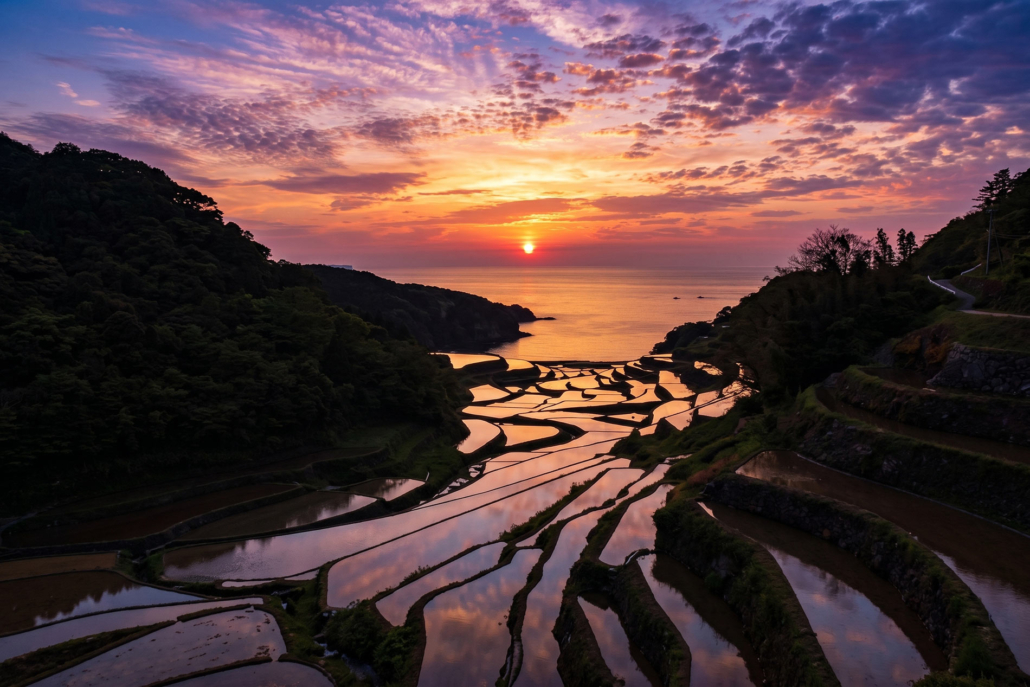
The terraces were built into the hillside above the sea by generations of farmers. In spring, water fills the individual paddies and turns them into hundreds of small mirrors. From the viewpoint, the fields cascade toward the ocean, creating layers of reflections that change every few minutes as the sun drops.
This is exactly the kind of location where I like to work slowly. A wide-angle composition can show the entire geometry of the terraces, while a longer lens lets us isolate individual paddies and reflections.
We will stay through sunset and, hopefully, a little blue hour before heading back to Itoshima.
Photography focus: reflections, rice terraces, coastal landscapes, sunset and blue hour.
Day 2 — April 19, Monday
Couple Stones, Karatsu Castle & the 99 Islands
We start before breakfast at Sakurai Futamigaura, walking down to the beach for sunrise.
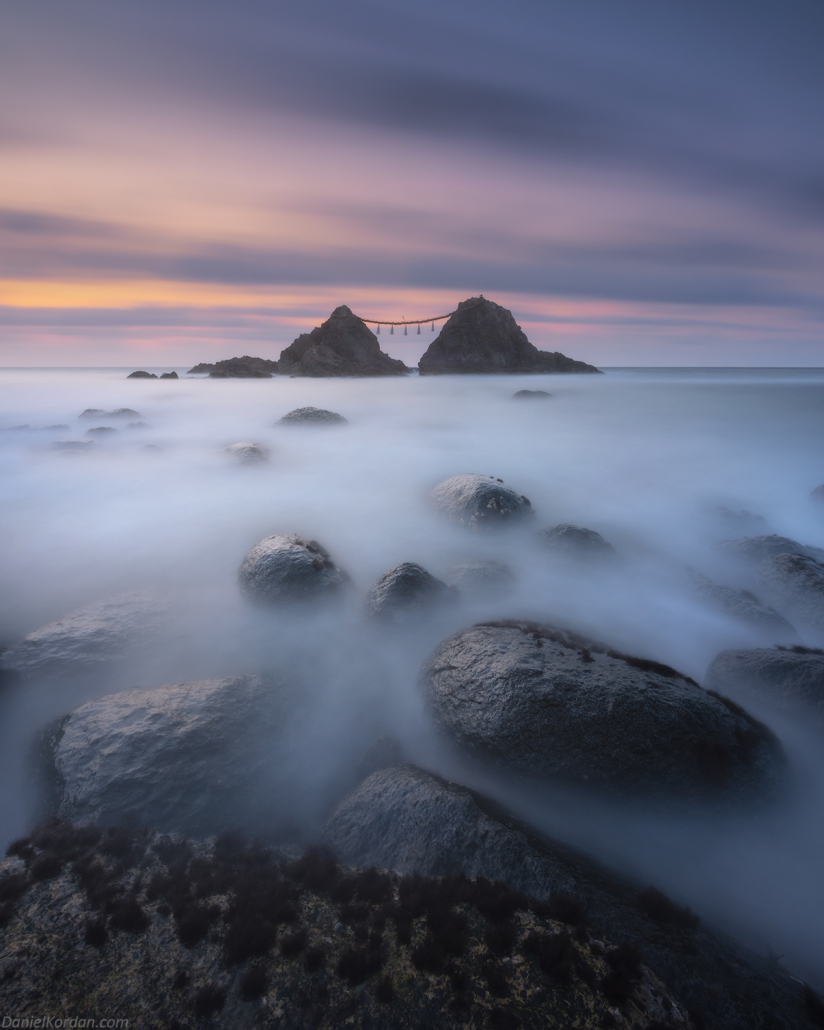
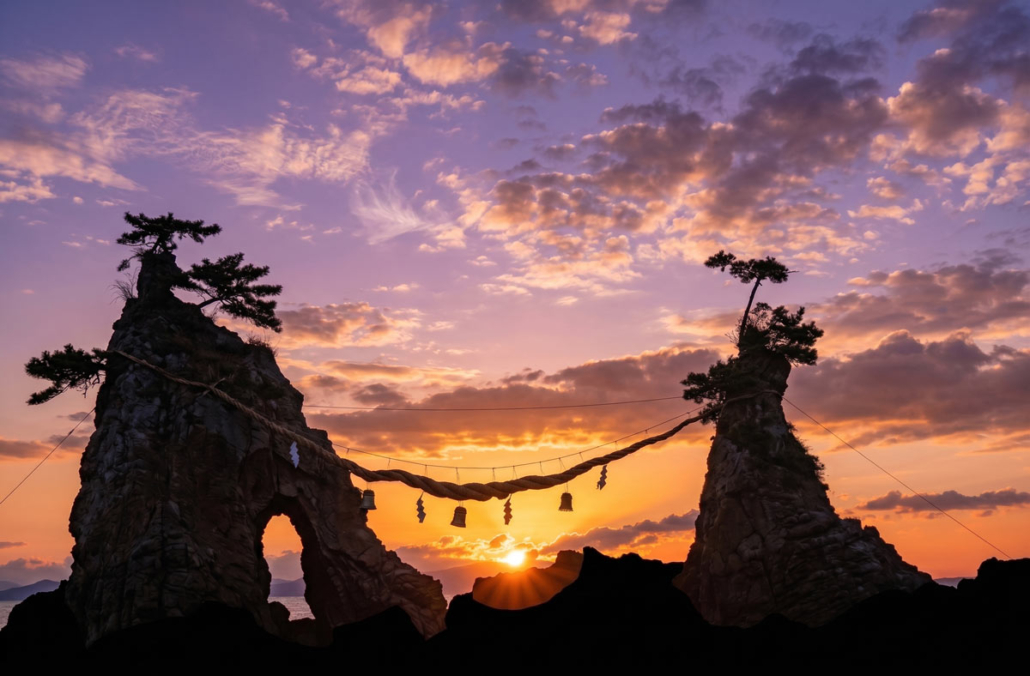
The famous Couple Stones, or Meotoiwa, are two offshore rocks tied together with a massive shimenawa rope. The site belongs to Sakurai Shrine and has been considered sacred for generations. Interestingly, although the better-known Futamigaura in Mie is associated with sunrise, the Itoshima Futamigaura is known as the “Sunset Futamigaura.”
For us, sunrise is still a great opportunity. The composition is wonderfully clean: white torii, dark rocks, open sea and sky. I will be looking for different ways to balance the geometric elements rather than simply making the classic postcard image.
After breakfast and some downtime, we check out and drive to Karatsu.
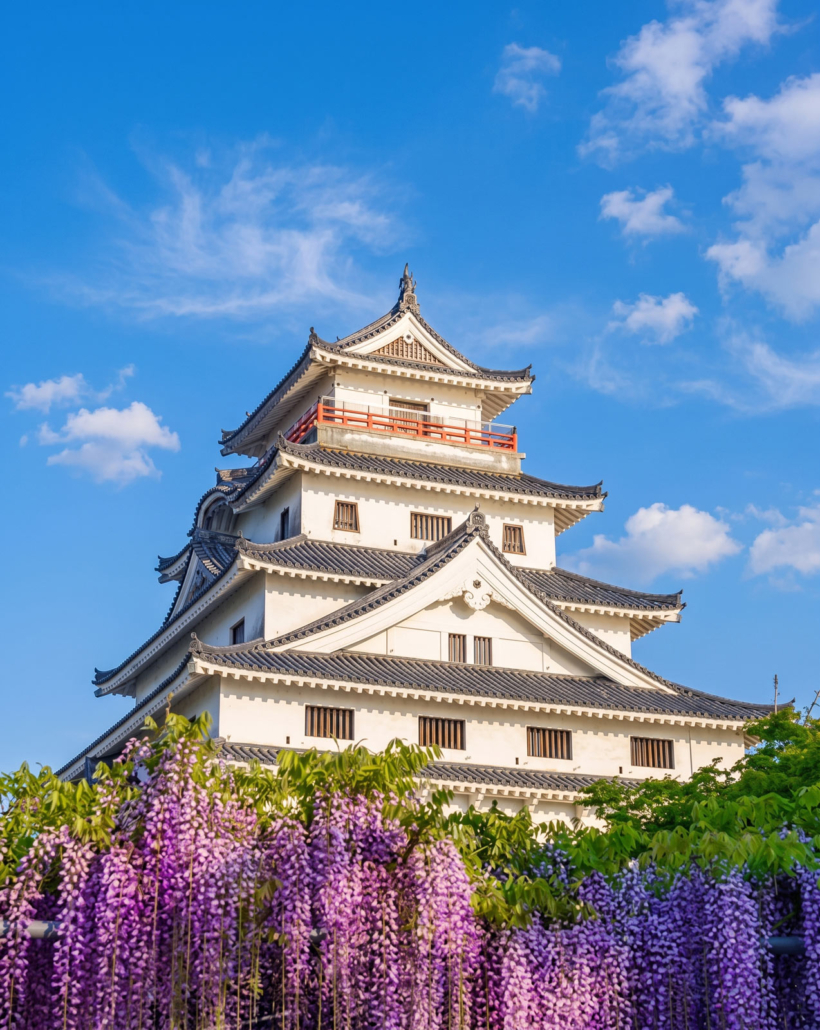
Our main target is Karatsu Castle, dramatically positioned above the sea. The castle was completed in 1608 and is known as Maizuru Castle, or “Dancing Crane Castle,” because its shape resembles a crane with outstretched wings. In spring, the gardens around it are filled with cherry blossoms and wisteria.
In late April, the wisteria should be our star.
We photograph the hanging flowers with the castle behind them, playing with compression, layers and the relationship between the old architecture and the very soft, almost surreal flowers.
Then comes lunch — and I promise this is not just a convenient restaurant stop. We will have seafood at Gen-yo Karatsu, with local Yobuko squid and seasonal sashimi. Kyushu is a serious food destination, and I don’t intend to ignore that fact.
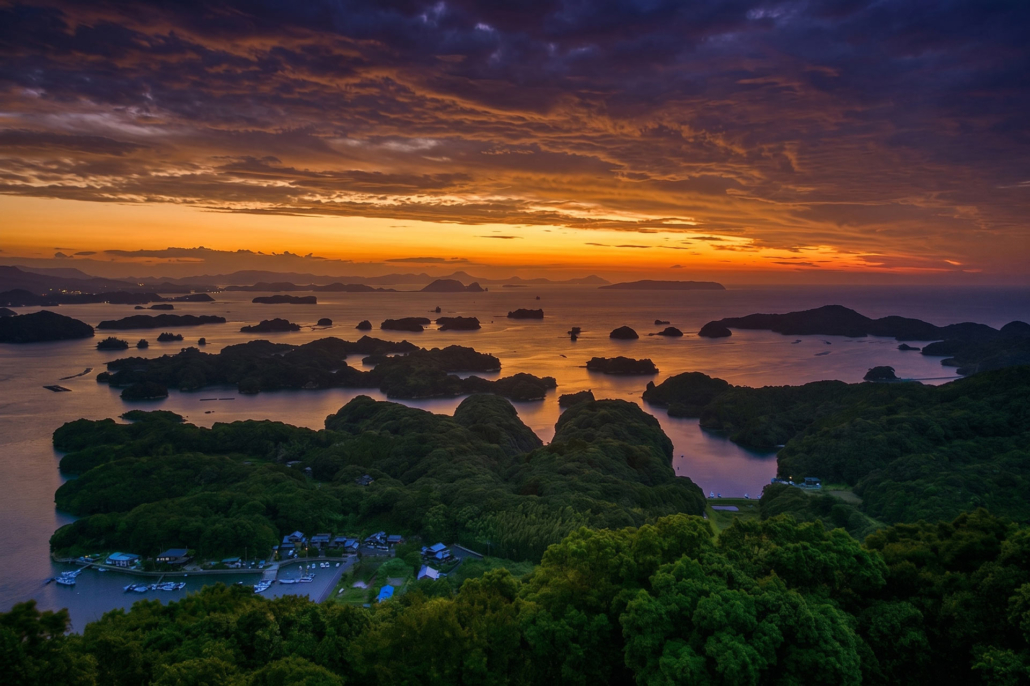
In the afternoon we continue toward Sasebo and Kujukushima — the “99 Islands.”
The name is not meant literally; the coastline is a maze of far more than 99 islands, islets and rocky outcrops. From the viewpoints, they overlap one another like layers of ink wash painting.
For sunset, Ishidake Observatory is particularly interesting. The viewpoint sits about 191 metres above the sea, and the islands stack into the distance in almost impossibly delicate layers. It has even been used as a filming location for The Last Samurai.
This is a long photography evening: late afternoon scouting, golden light, sunset and then blue hour.
After that, we drive toward Tara.
Photography focus: minimalist seascapes, sacred architecture, wisteria, island layers, sunset and blue hour.
Day 3 — April 20, Tuesday
Torii in the Sea & the Sand Patterns of Okoshiki
Today is governed by the moon rather than the clock.
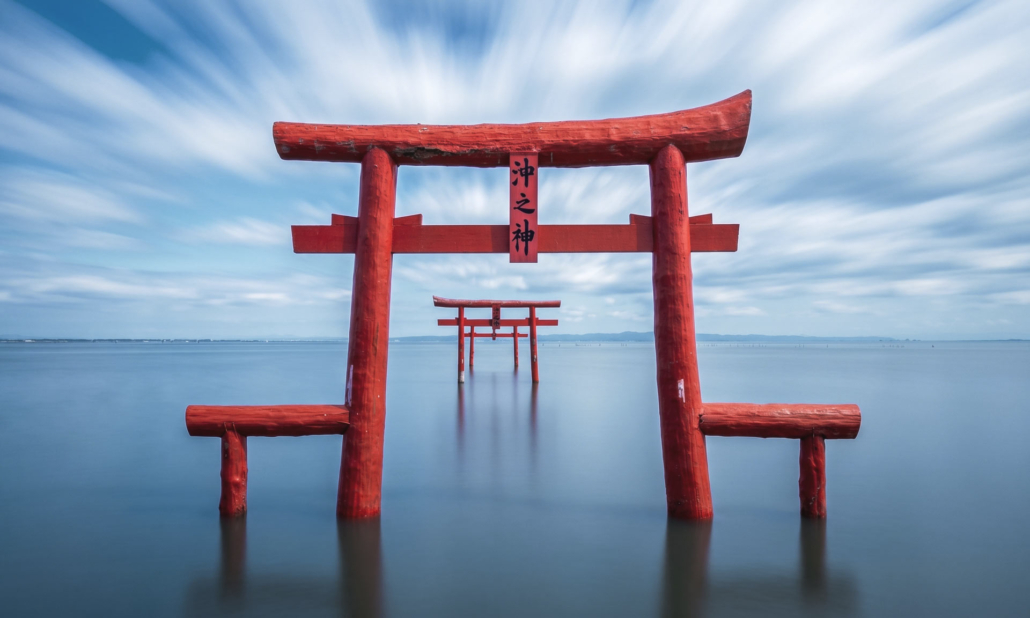
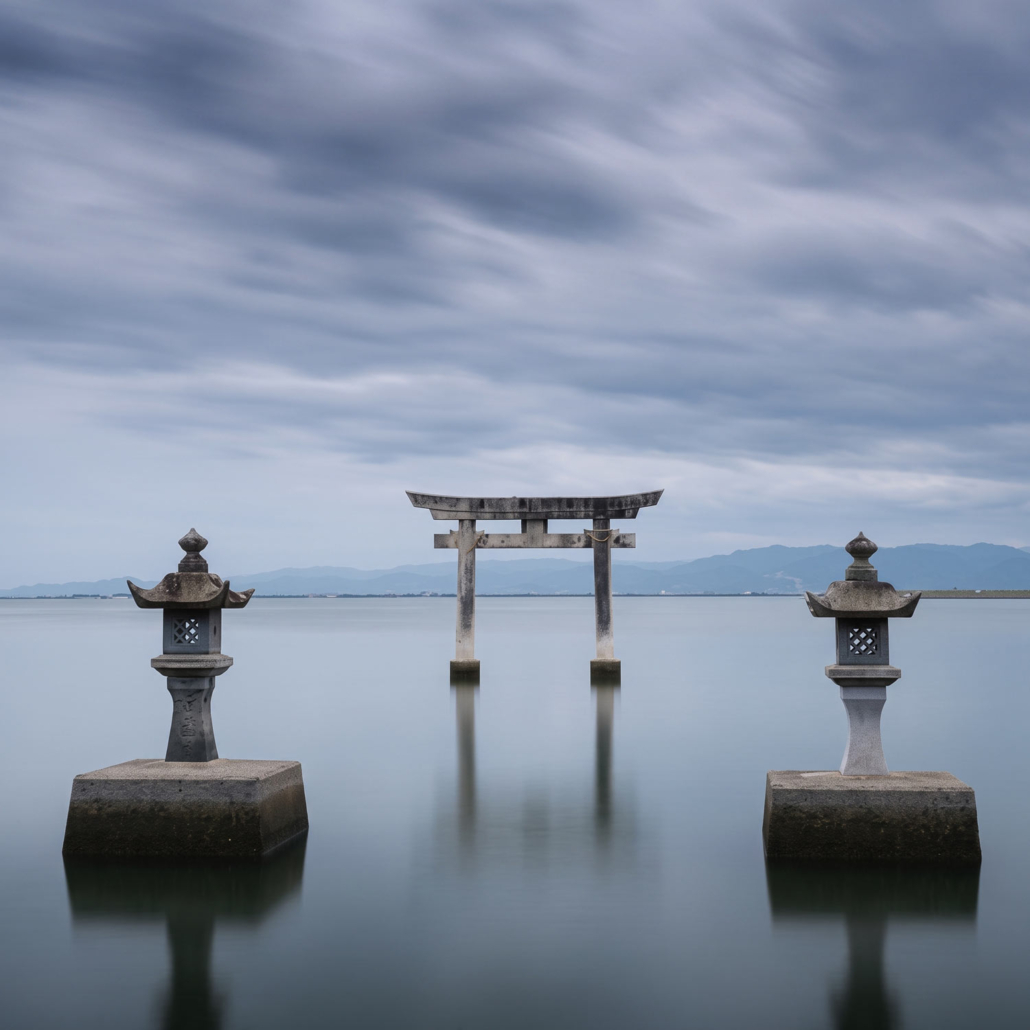
After breakfast we drive to Ouo Shrine, famous for its three torii standing in the waters of Ariake Bay.
The shrine is especially interesting photographically because the scene changes completely with the tide. At high water, the gates appear to float in the sea; at low tide, the surrounding mudflats reveal a completely different landscape.
We have timed the morning specifically for the high tide, giving us the strongest composition of the torii surrounded by water.
This is one of those locations where a tripod and longer exposures can work beautifully. Calm water can turn the scene into something almost abstract, while a telephoto lens compresses the torii against the distant shoreline.
After the morning shoot, we take the scenic route along Ariake Bay toward Kumamoto.
The middle of the day is deliberately slower. We have time for lunch, a proper break and some image backup before going out again.
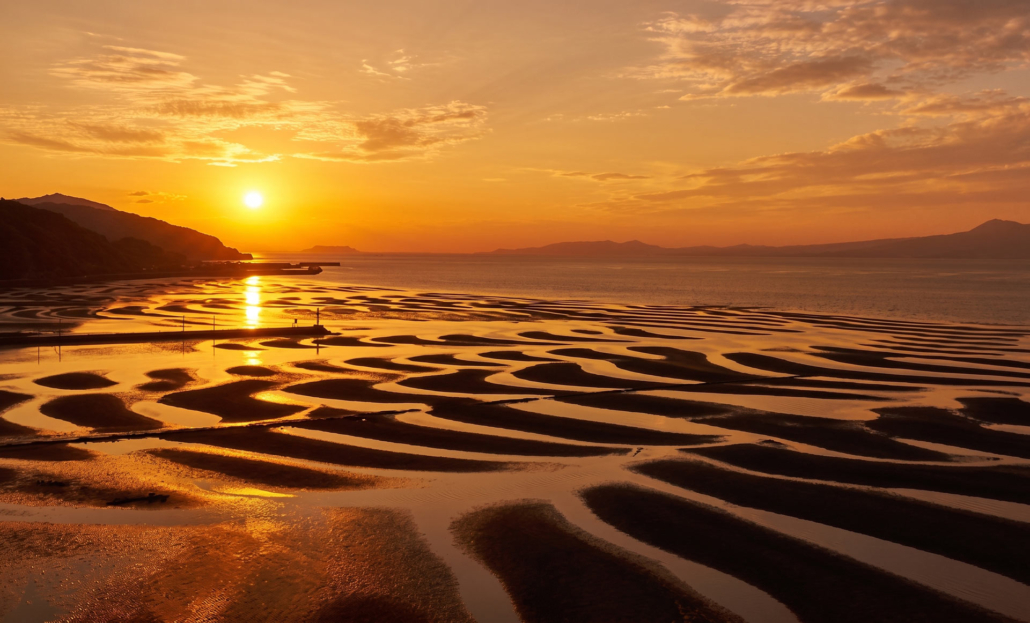
In the late afternoon we head to Okoshiki Coast.
This beach is famous for the enormous patterns created in the sand by the retreating tide. From above, the shoreline looks almost like a piece of abstract topographic art. The trick here is timing: we want the tide low enough to reveal the patterns, but still close enough to sunset that the low sun can skim across the ridges and create shadows.
This is a perfect place for drones — weather and local regulations permitting — but there is also plenty to work with from the ground. A telephoto lens can turn the sand into graphic layers, while a wider composition gives us the relationship between the patterns, sea and mountains.
We finish with sunset and blue hour before returning to Kumamoto.
Photography focus: marine torii, tides, reflections, abstract sand patterns and long exposures.
Day 4 — April 21, Wednesday
Great Wisteria & a Torii Between Sea and Sky
Today starts with something completely different: a Japanese Shinkansen ride.
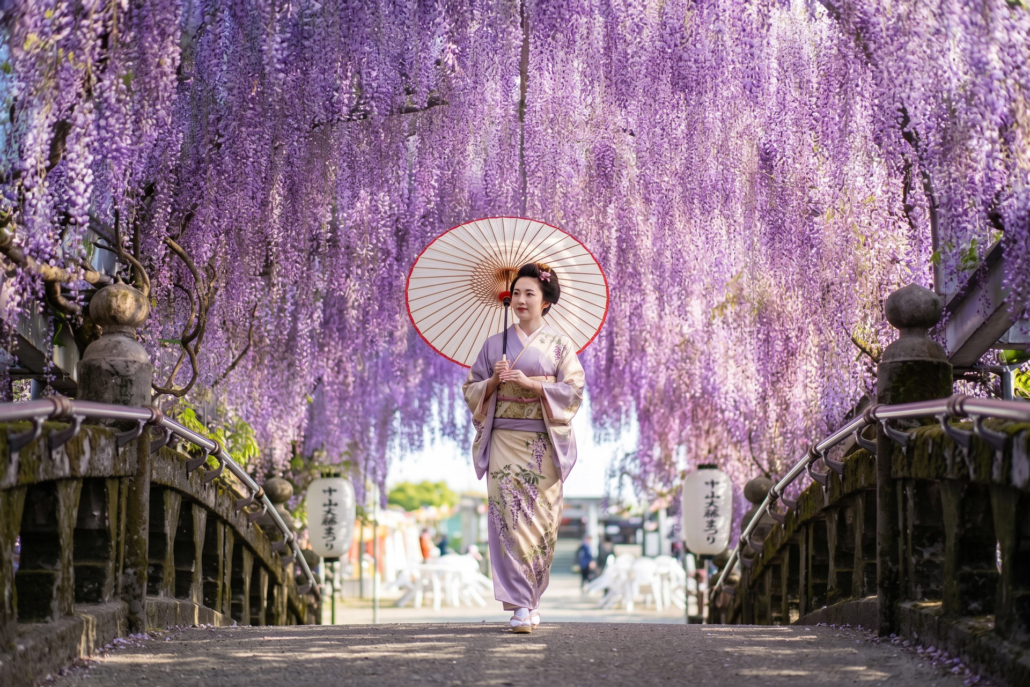
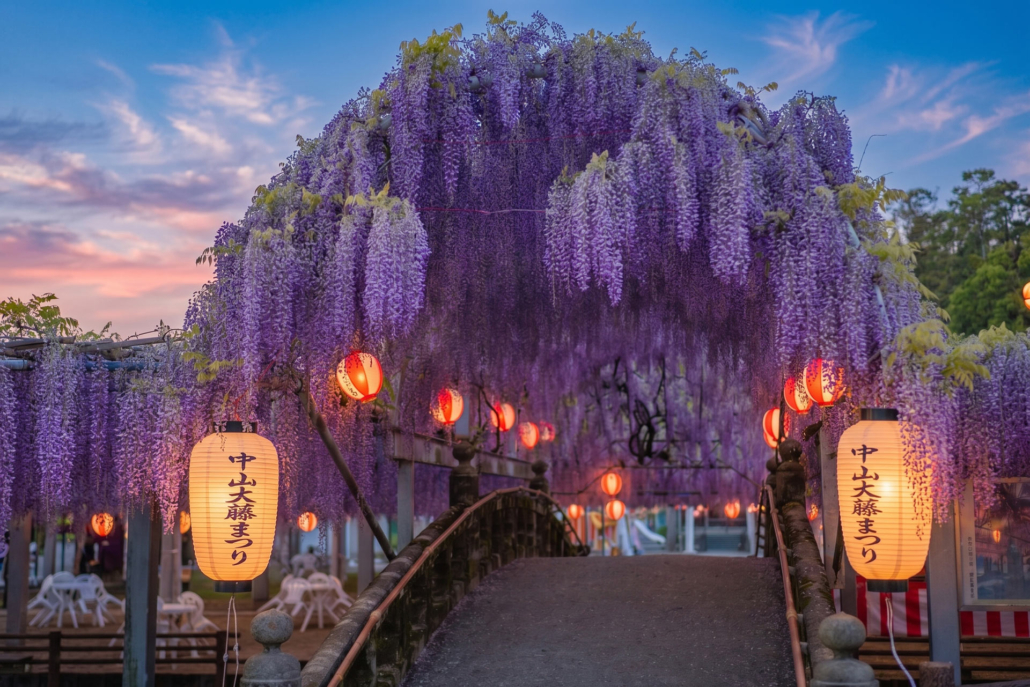
We walk to Kumamoto Station and take the Kyushu Shinkansen to Chikugo-Funagoya, then continue by taxi to The Great Wisteria of Nakayama.
The main tree is estimated to be more than 300 years old and is designated as a natural monument. In late April, the enormous canopy of flowers becomes one of the most spectacular seasonal displays in Kyushu.
We go early, when the light is softer and there are fewer people.
Rather than photographing only the famous tunnel-like view, I want us to look for details: individual hanging flowers, layers of branches, reflections, people disappearing into the purple canopy and small pockets of light.
After returning to Kumamoto, we have several hours to slow down. This is another intentional pause in the itinerary: breakfast, onsen, editing, coffee, or simply doing nothing.
Late afternoon we head out again to Einoo Tsurugi Shrine.
The shrine was founded in 713, and local tradition connects its name and origin with a giant stingray that came to rest in the area. The marine torii changes dramatically with the tide, while the shrine itself sits quietly above the water.
We arrive before sunset and work through golden hour into blue hour.
After the intensity of the morning wisteria, this evening should feel almost meditative: one torii, open water, changing light.
Photography focus: wisteria, seasonal details, minimal compositions, marine shrine and blue hour.
Day 5 — April 22, Thursday
Into the Volcano — Aso
Today we leave the coast behind and enter the volcanic heart of Kyushu.
We drive toward Aso-Kuju National Park, one of the great landscape regions of Japan.
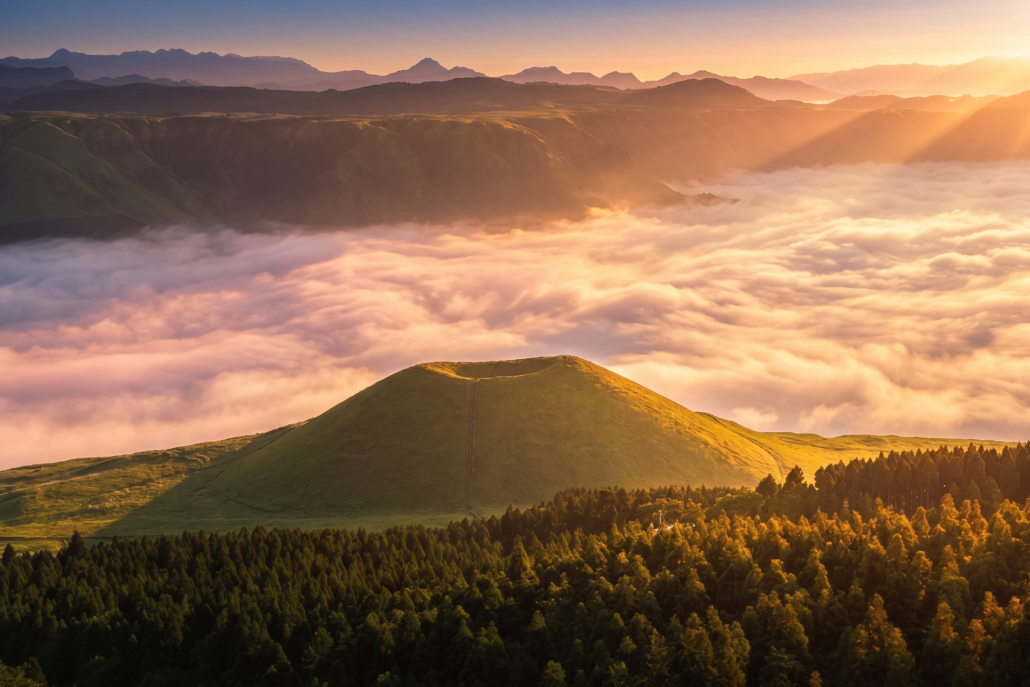
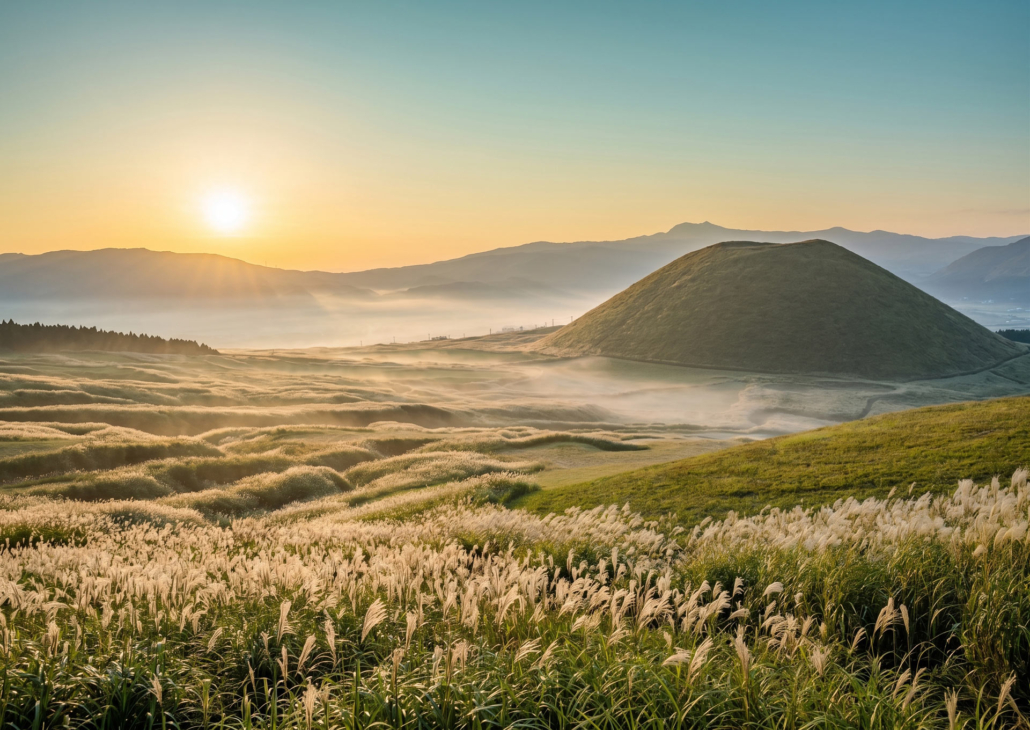
Aso is enormous. The caldera stretches for kilometres, with grass-covered volcanic cones rising from a landscape that feels more like New Zealand or Iceland than the Japan many people imagine.
Our main photographic area is around Kami-Komezuka and Daikanbo.
Kami-Komezuka is a beautifully symmetrical volcanic cone, almost too perfect to look real. From the right viewpoint it becomes a graphic landscape — soft green curves, a dark crater and enormous skies.
Later we move to Daikanbo, one of the classic viewpoints over the Aso caldera. This is where I want us to start thinking in layers: foreground grassland, volcanic ridges, distant mountains and whatever weather the day decides to give us.
Fog is welcome here. Clouds are welcome. Dramatic weather is very welcome.
Aso rarely looks the same twice.
We finish photography in the late afternoon and have a quiet evening in the mountains.
Photography focus: volcanic landscapes, layers, weather, graphic forms and wide panoramic scenes.
Day 6 — April 23, Friday
The Sacred World of Takachiho
We leave before sunrise for one of the most atmospheric mornings of the trip.
Our first destination is Ama-no-Iwato Shrine, deeply connected with one of Japan’s oldest myths.
According to the Kojiki and Nihon Shoki, the sun goddess Amaterasu hid inside a cave after a conflict with her brother Susanoo, plunging the world into darkness. The shrine is considered the sacred site of that story.
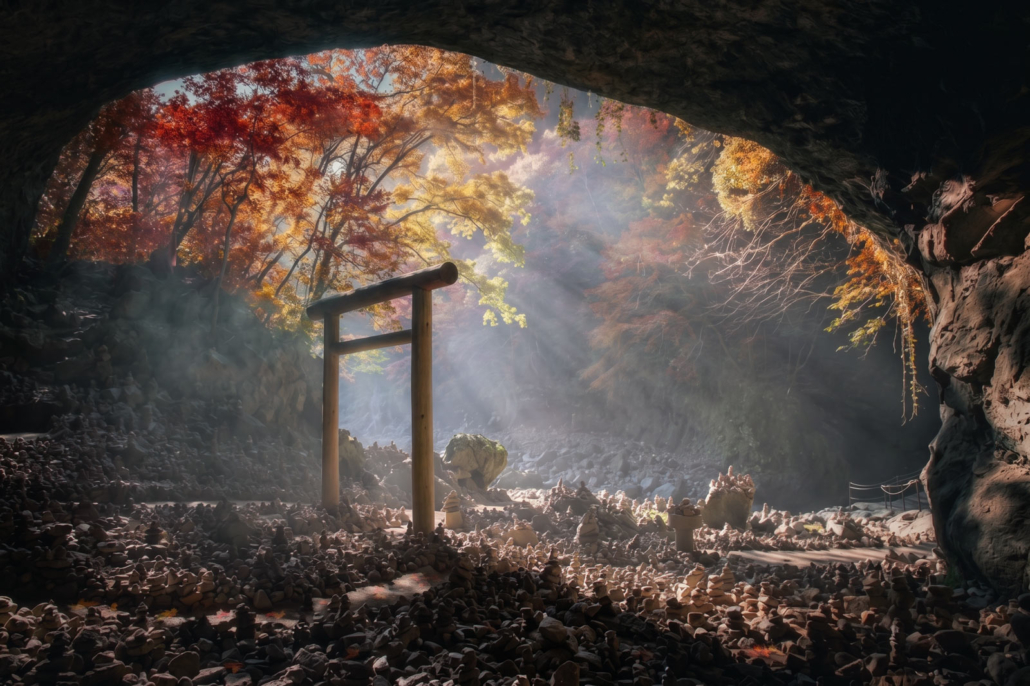
We continue toward Amano Yasukawara, a cave beside the river where visitors have traditionally stacked small stones. In the early morning, before the crowds arrive, the combination of rock, water, moss and dim forest light can be extraordinary.
Then we move to Takachiho Gorge.
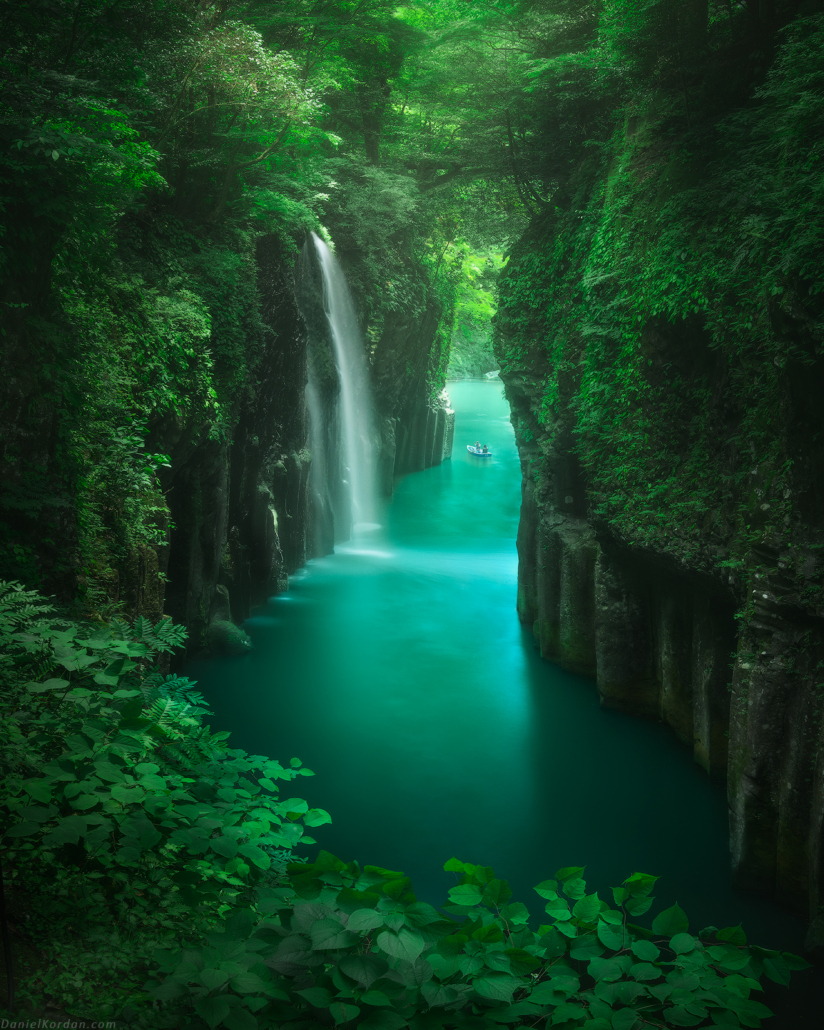
The gorge was carved through layers of volcanic rock and is famous for its dramatic basalt columns and Manai Falls. The cliffs rise vertically from the river, and the waterfall drops into the narrow gorge below.
This is a location where I often prefer a slightly longer lens. The scale can become much more interesting when you isolate sections of the basalt columns, trees and waterfall instead of trying to fit everything into one frame.
After the gorge, we drive toward Kamishikimi Kumanoimasu Shrine.
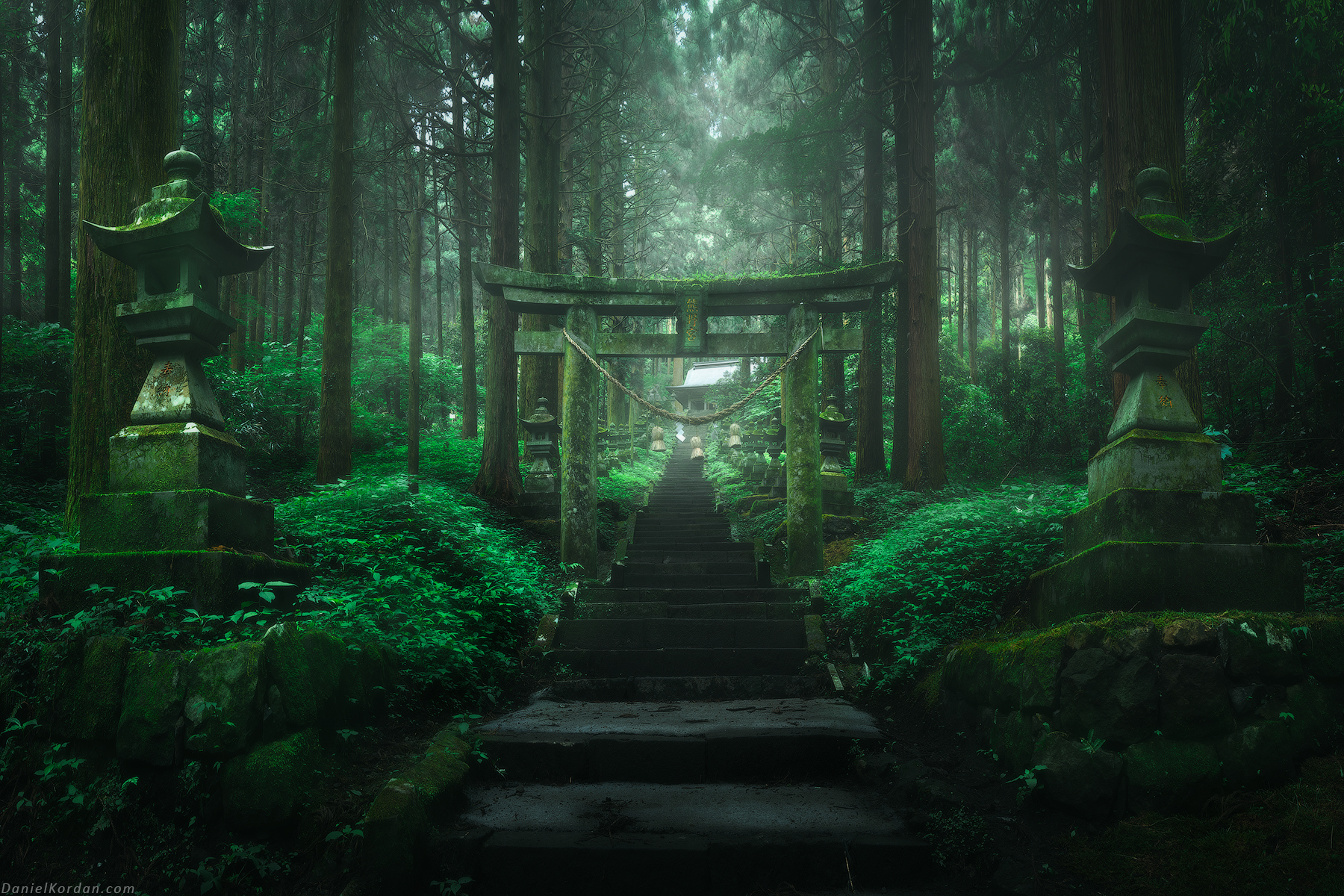
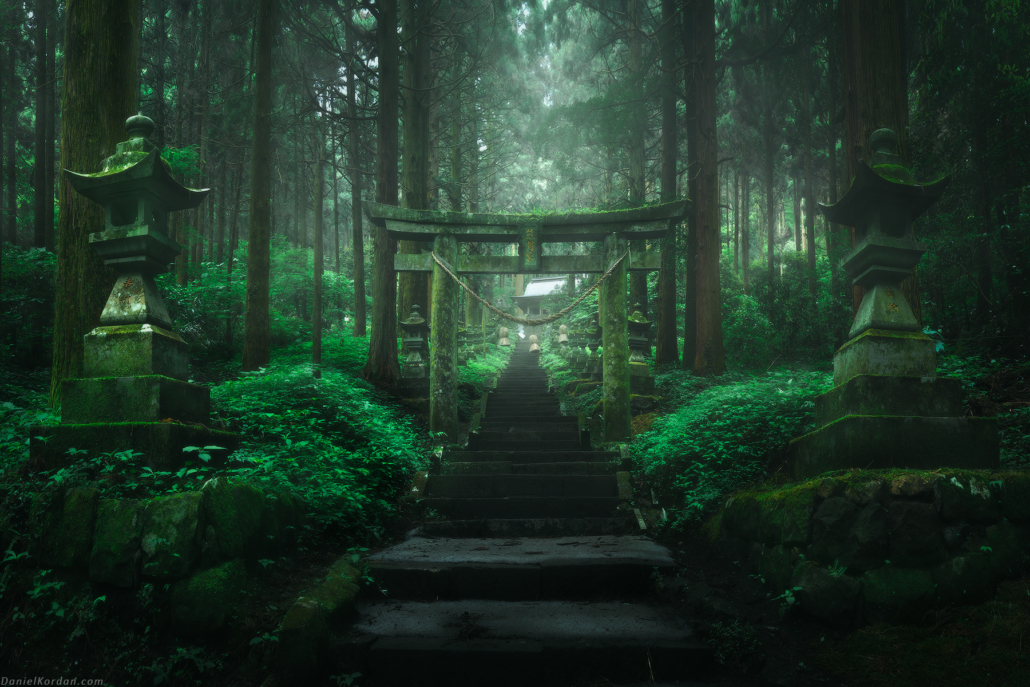
The approach alone is worth the visit: a long staircase disappearing into a deep forest with around 100 moss-covered stone lanterns. It is particularly beautiful in soft weather or mist, when the forest becomes almost cinematic.
We photograph slowly here.
By early afternoon we return to the hotel area, and the remainder of the day is free for lunch, onsen and editing.
Honestly, after a morning like this, you will probably need the nap.
Photography focus: ancient forests, atmospheric shrines, moss, water, basalt cliffs and Japanese mythology.
Day 7 — April 24, Saturday
Aso — We Let the Weather Decide
I am intentionally leaving this day open.
Aso is one of those landscapes where the weather can completely change the photograph. A clear blue sky can be beautiful, but fog rolling through the volcanic valleys can transform the same place into something almost unreal.
So rather than forcing a sunrise or sunset simply because it appears on a printed schedule, we will watch the forecast and choose the best window.
That might mean a 5:00 AM sunrise expedition, followed by breakfast and a long rest.
Or it might mean a relaxed morning and a late-afternoon drive for sunset.
We can revisit locations from Day 5, explore different viewpoints, search for mist, or simply follow whatever atmospheric conditions appear on the day.
For me, this is an important part of a photography tour: leaving room for the landscape to surprise us.
Photography focus: weather, atmosphere, volcanic landscapes and whatever Aso decides to show us.
Day 8 — April 25, Sunday
Yufuin — Mountains, Mist & Onsen Country
After several early starts, we slow down.
We have a relaxed morning before driving toward Yufuin, a small mountain resort surrounded by forest and volcanic peaks.
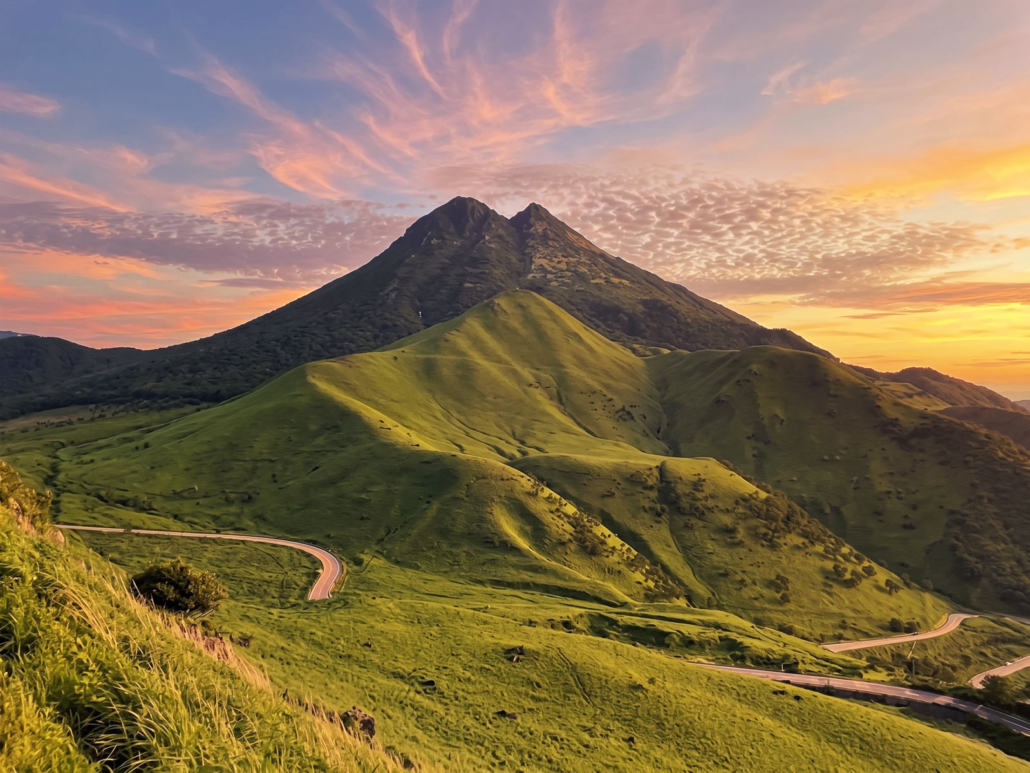
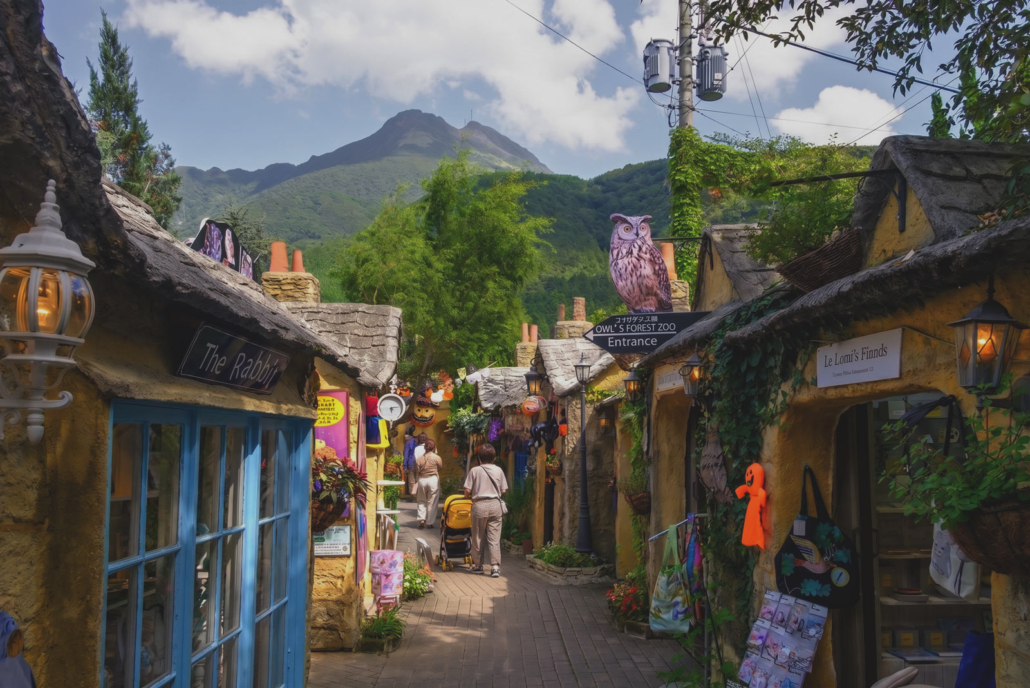
Yufuin is famous for its hot springs, traditional atmosphere and beautiful setting beneath Mount Yufu. But rather than spending the day rushing between tourist attractions, we will use the afternoon to explore the landscape around the town.
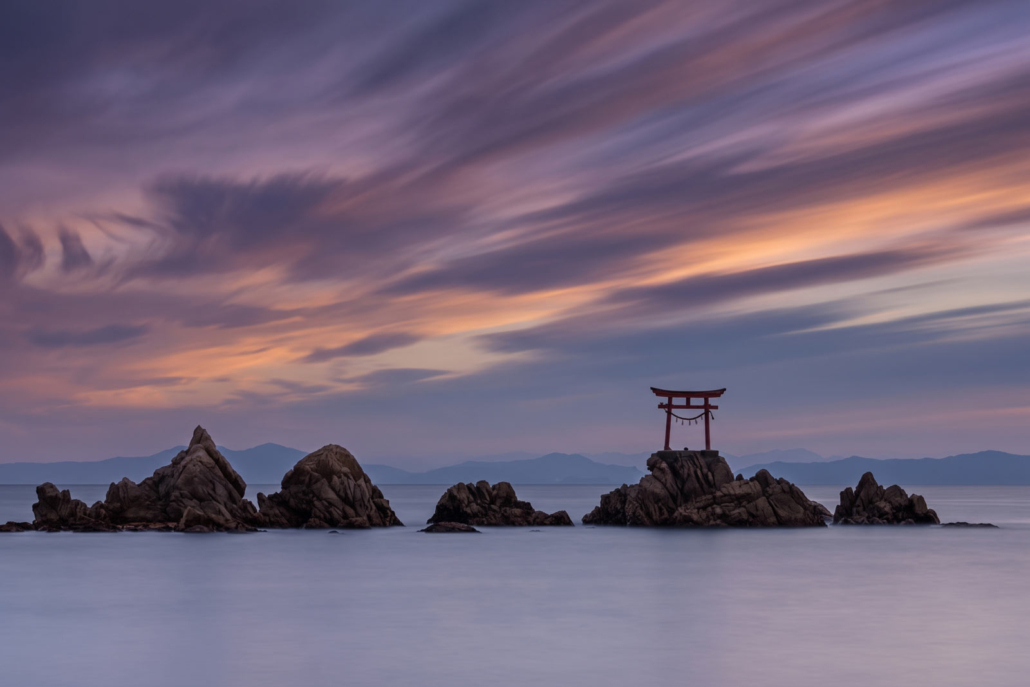
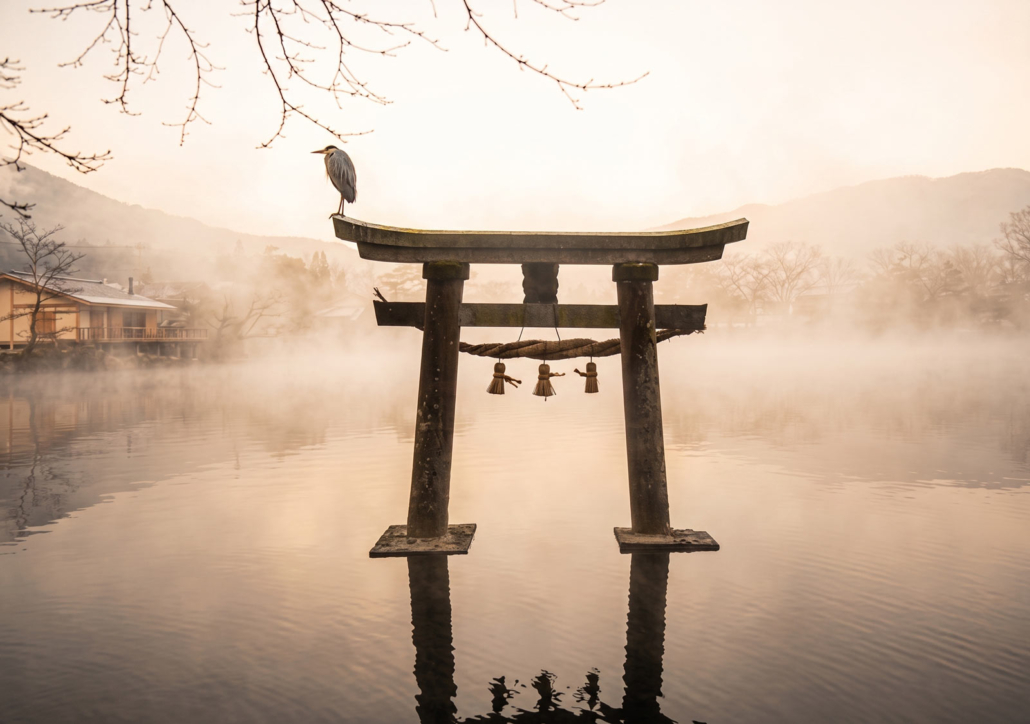
After lunch and some time to settle in, we head toward Kanawa-jima for sunset. Alternatively we can visit Hachiman Nadagu Shrine, depends on the weather. Torii gates are perfect for long exposure shots.
The area becomes particularly interesting later in the day, when the lower sun starts separating the mountains and water into layers.
This is another evening where I want us to work with lenses rather than simply make one “main” photograph. Wide compositions, compressed mountain layers and small details can all work together as a visual story.
Then we return to Yufuin for a slow evening.
And yes, this is an excellent night for an onsen.
Photography focus: mountain landscapes, atmospheric light, reflections and sunset.
Day 9 — April 26, Monday
Yufuin & Beppu — The Landscape of Steam
We spend today exploring the Yufuin and Beppu region at a slower pace.
Beppu is one of the world’s great hot-spring cities, with an extraordinary concentration of geothermal activity. The region sits above a volcanic system fed by groundwater heated deep underground, and enormous amounts of steam rise through the city.
This makes Beppu especially interesting for photography.
We can move through the old Kannawa area, where steam escapes from streets, drains and buildings, creating a strange atmospheric landscape. Historically, hot springs have been central to the area for centuries; Kannawa and Hamawaki are regarded as among the origins of Beppu’s onsen culture.
Photographically, I love places like this because they are not traditional “landscape photography” at all. They are about atmosphere.
Steam against dark roofs.
People disappearing into clouds of vapour.
Small streets covered in moisture.
Mountains behind the town.
A little bit of chaos inside an otherwise incredibly ordered Japan.
We will also explore viewpoints and landscapes around Yufuin, adapting the day to weather and light rather than following a rigid sightseeing route.
By late afternoon we return to Yufuin.
Photography focus: villages, atmosphere, traditional streets, mountain scenery and documentary-style images.
Day 10 — April 27, Tuesday
Wisteria Tunnels & Fukuoka
Our final morning starts early.
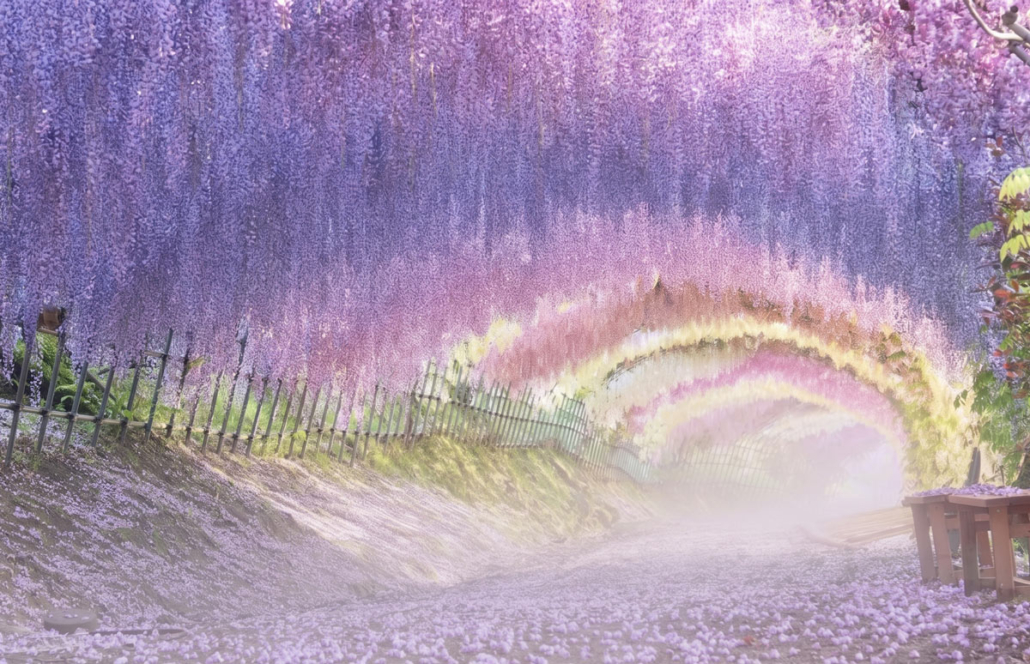
We check out and drive toward Kawachi Fujien, one of Japan’s most famous wisteria gardens.
The garden is known for its extraordinary flower-covered tunnels, with long hanging curtains of wisteria creating layers of color and depth. Late April is exactly the time we want to be here, although flowering conditions naturally vary each year.
Entry to the garden requires an advance reservation, so this needs to be arranged before the trip.
We arrive around opening time and spend the morning photographing the tunnels while the light is still soft.
This will be our final photographic session of the journey — and after ten days, there is something nice about ending with flowers rather than another epic mountain.
By around 11:00 AM we leave the garden and drive back toward Fukuoka Airport.
We should arrive around 1:00–2:00 PM, where our Kyushu photography adventure officially comes to an end.
For flights, I recommend booking departures from around 3:30–4:00 PM onward, giving us a comfortable buffer for the transfer.
And then, suddenly, it is time to empty the memory cards, back up everything three times, and start thinking about the next adventure.
Tour finishes: Fukuoka Airport, approximately 1:00–2:00 PM.
Price: 8900 USD
Single supplement 1500 USD
Where do we stay (hotels can be changed to similar level, I prefer traditional ryokans with great natural onsens):
- Itoshima — seven x seven Itoshima
- Tara — Takezaki Crab & Sake Inn Tsurusou
- Kumamoto — THE BLOSSOM KUMAMOTO
- Aso — Kamenoi Hotel Aso Park Resort
- Yufuin — Yama no Hotel Musouen
Photography Level
- Beginners and advanced photographers
- DSLR / mirrorless / drone support in some areas
Tour Include
- Comfortable vehicle logistics along the route and shinkansen trains tickets
- Expert local guides and official local tour company support
- A photographer – English speaking guide accompanying you throughout the journey, expert in the area
- Hotel stay twin rooms (single is possible with single supplement)
Tour Exclude
- International flights
- Entry visa if applicable
- Travel insurance private
- Alcoholic beverages, personal expenses, tips
- Meals except some breakfast (some we skip due to early sunrise getting snack at convenience)
Cancellation and Refund Policy
We strongly recommend you to get a Trip Cancellation & Travel Insurance after booking your trip. If you cancel and the Workshop is otherwise filled, we will refund you the full amount you have paid towards the tuition, minus a $300 service charge. If you cancel and the Workshop does not fill, then you will be refunded according to the following schedule, based on the full fee of the Workshop:
Greater than 90 days from the start date of the Workshop:
full refund minus $300 service fee.
75 days or more :75% refund 60 days or more: 50% refund
Less than 60 days: no refund Refunds will be paid by the same method that the original payment was made.
What to bring
the list will be provided to the guests


