
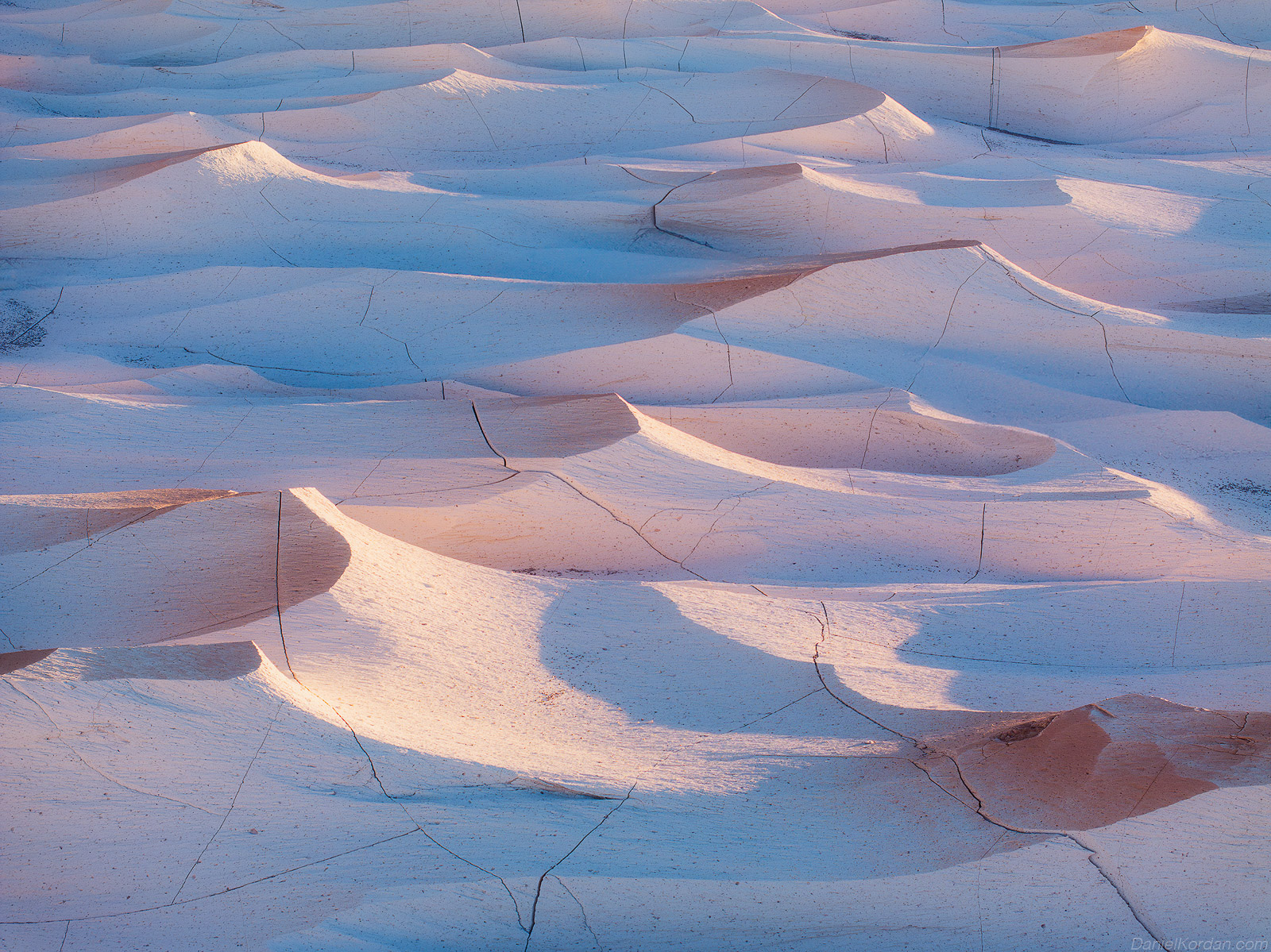
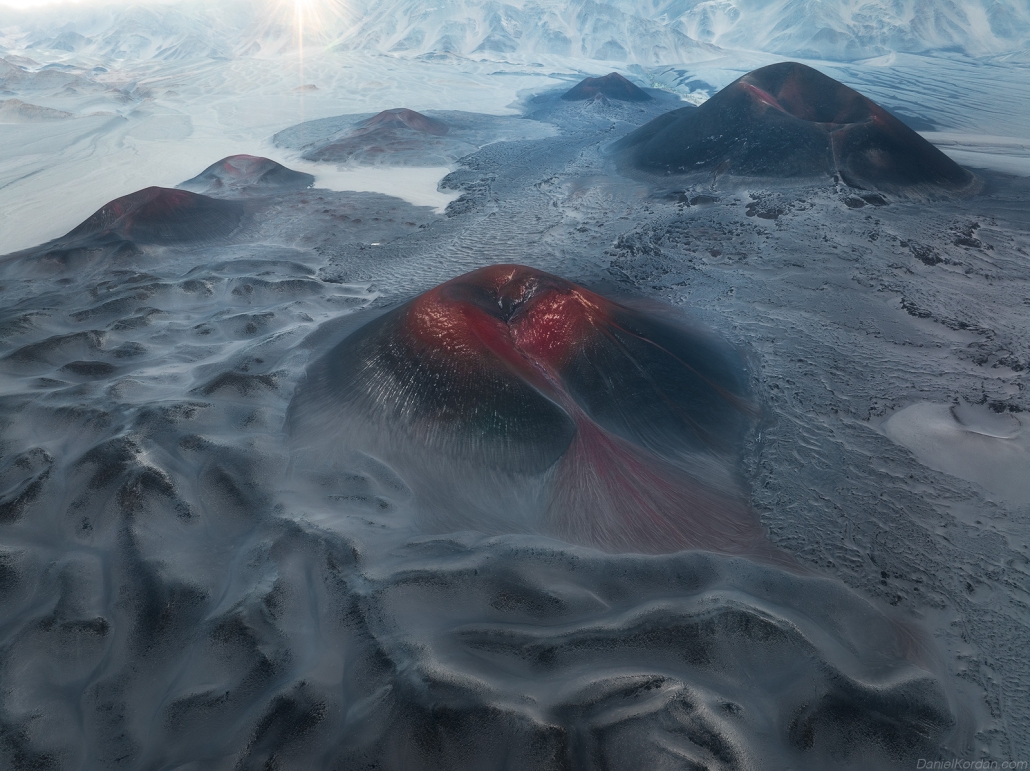
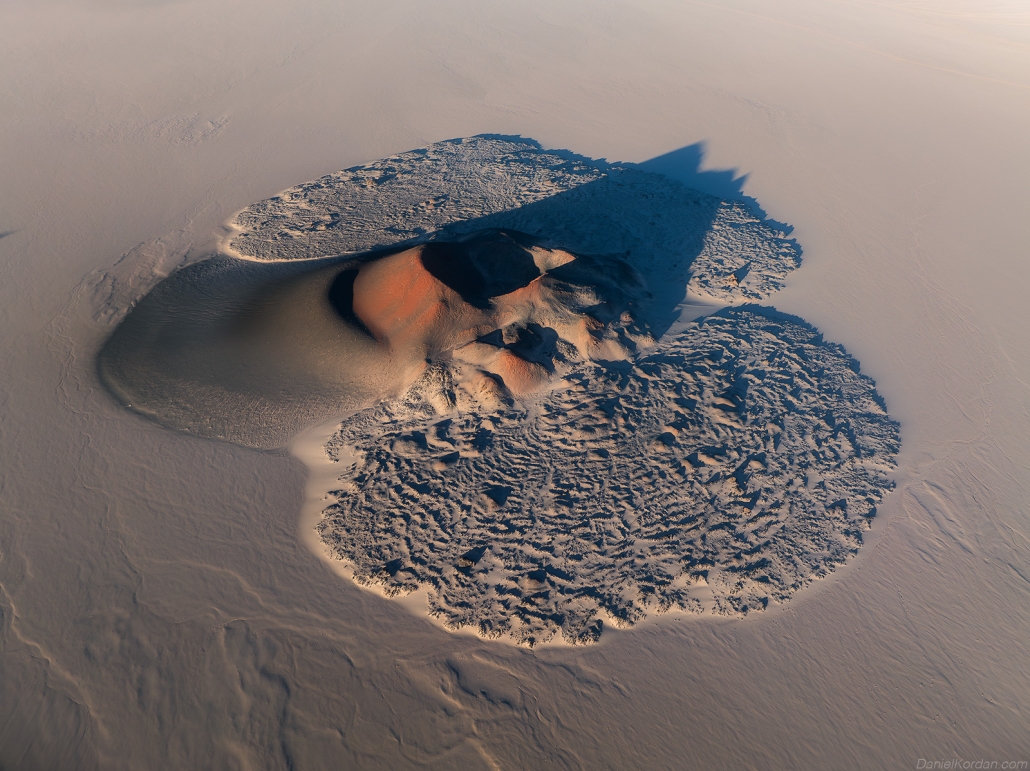
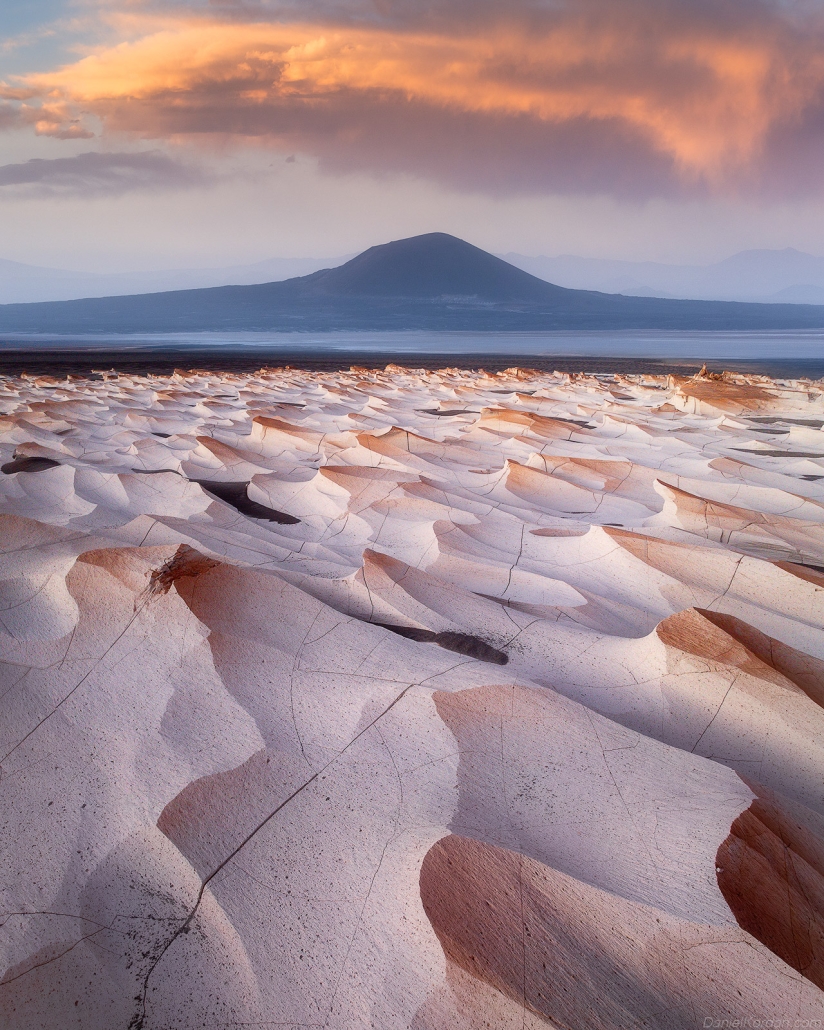
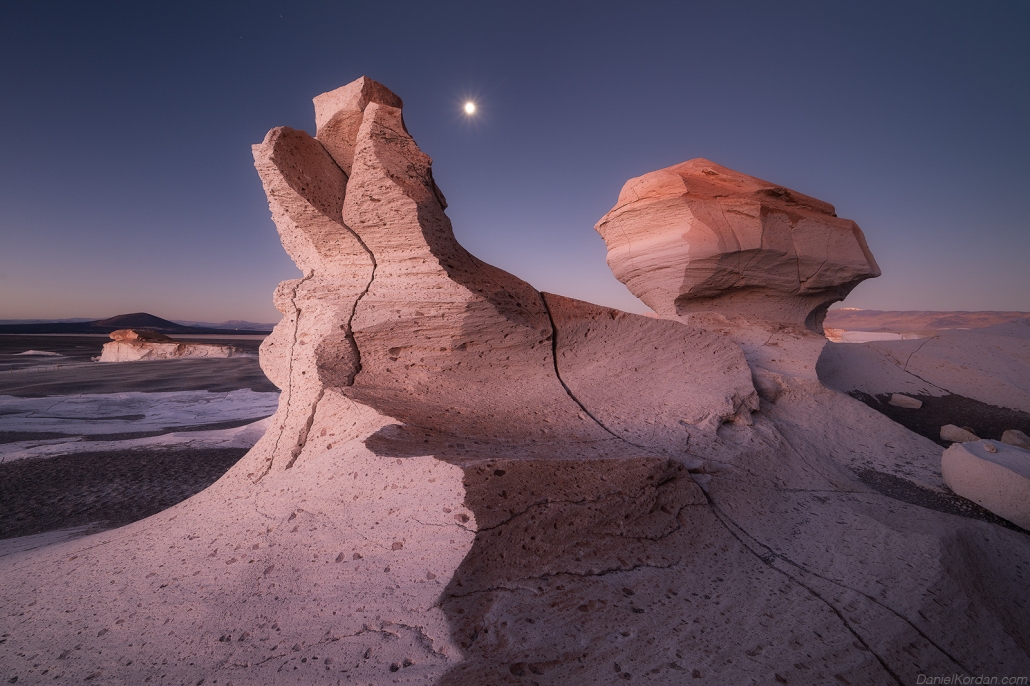
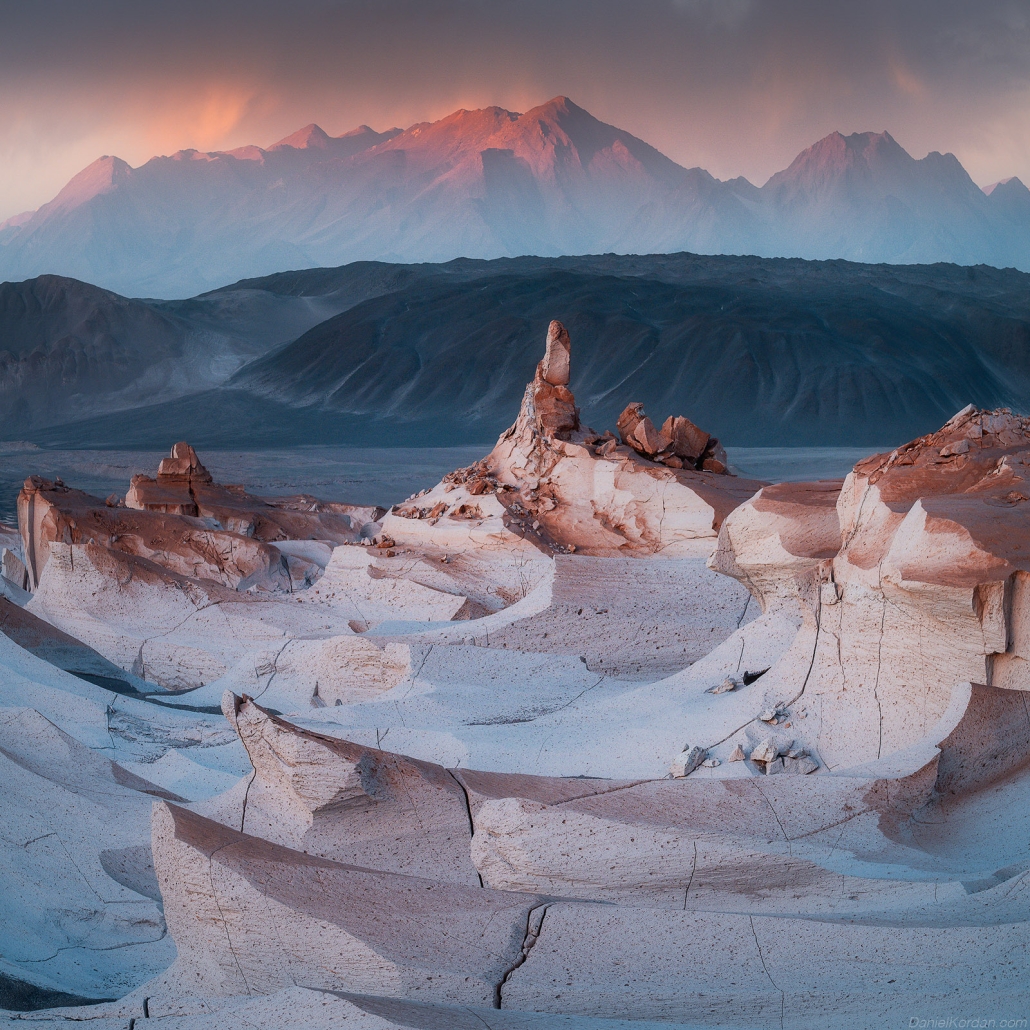
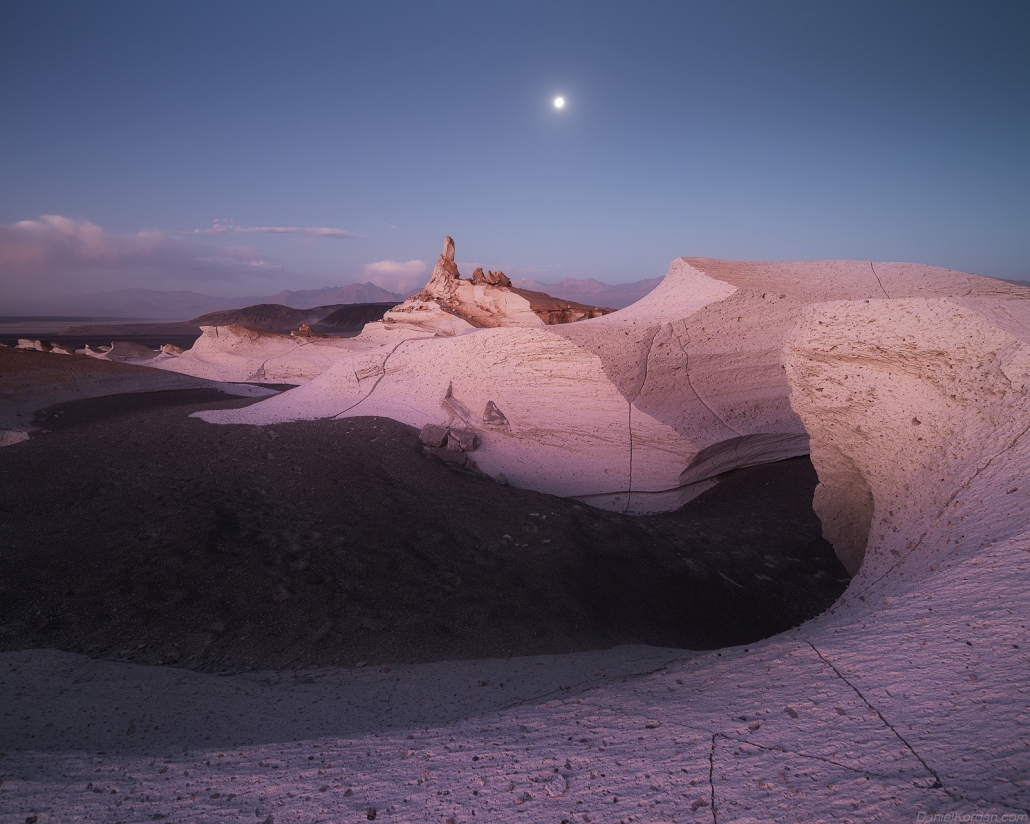
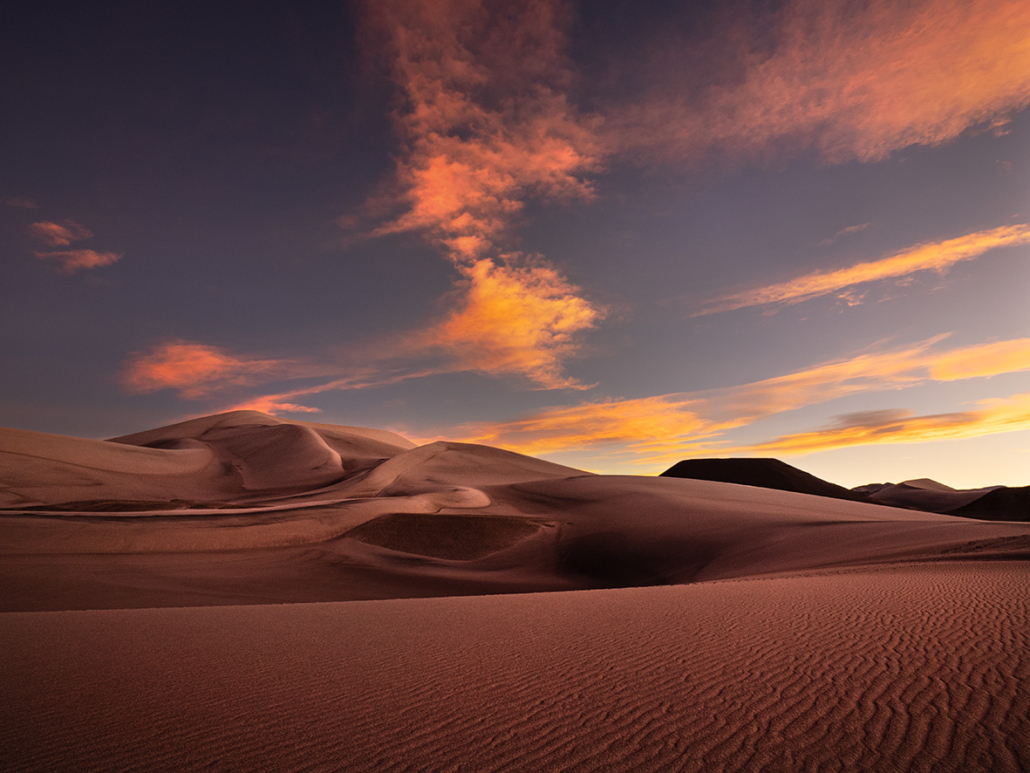
Puna Atacama is the desert region in Argentina’s remote northwest. No need to fly to Mars. Part of it’s spirit is definitely located here on Earth in Puna Atacama. Landscape with mountains like rainbows, salt flats, volcanoes, pumice fields. These views seem to be from Dali painting. Ideal place for abstracts, to experiment with minimal compositions and night photography. The place rarely visited by photographers, remote and desolate. If you wish to explore Puna with me – you are very welcome to join this photography expedition! See the itinerary below and fill in sign up form to join.
March 19-29, 2027 – guided by Ossian Lindholm


Day 1, March 19, 2027
Our adventure begins in Salta, a short two-and-a-half-hour flight from Buenos Aires. In the evening, you’ll meet your guide and fellow photographers over a welcome dinner before settling in for the night at your hotel in Salta.
Day 2, March 20, 2027
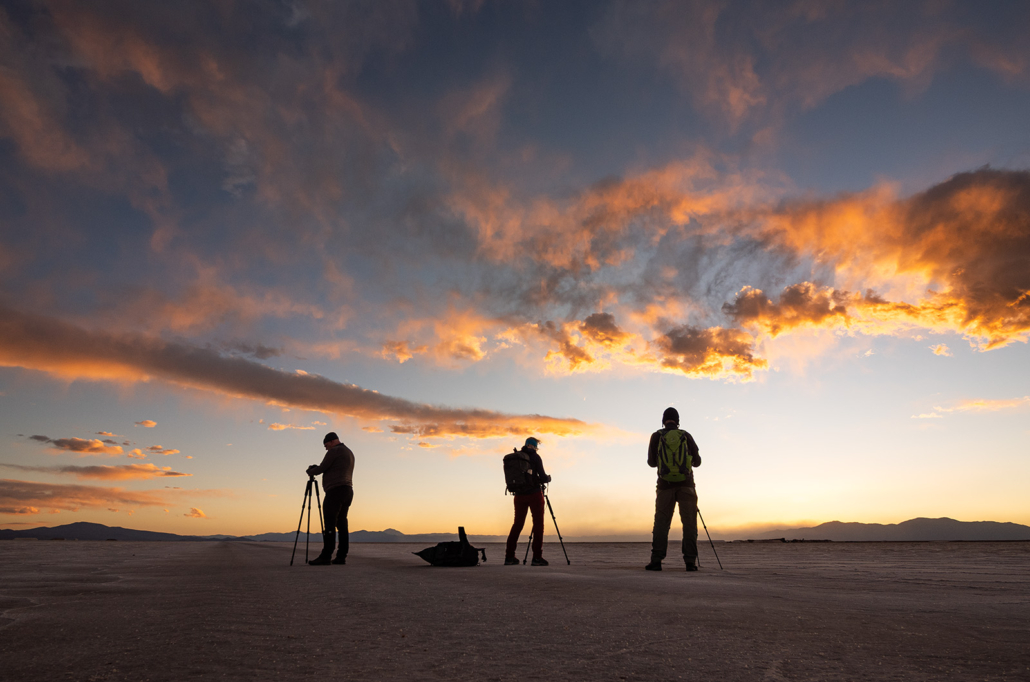
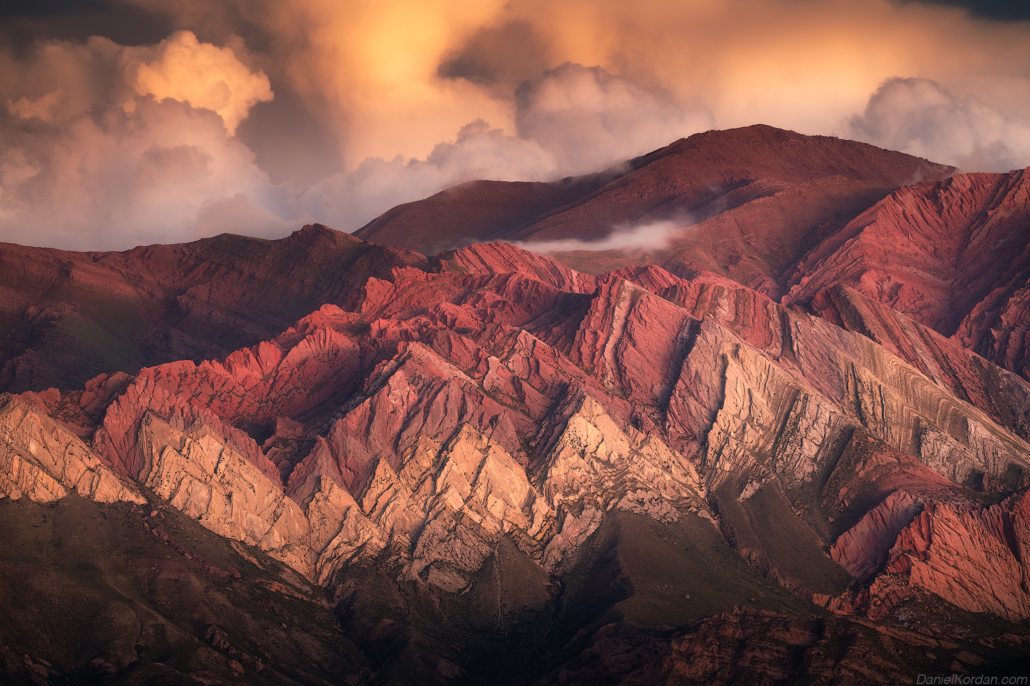
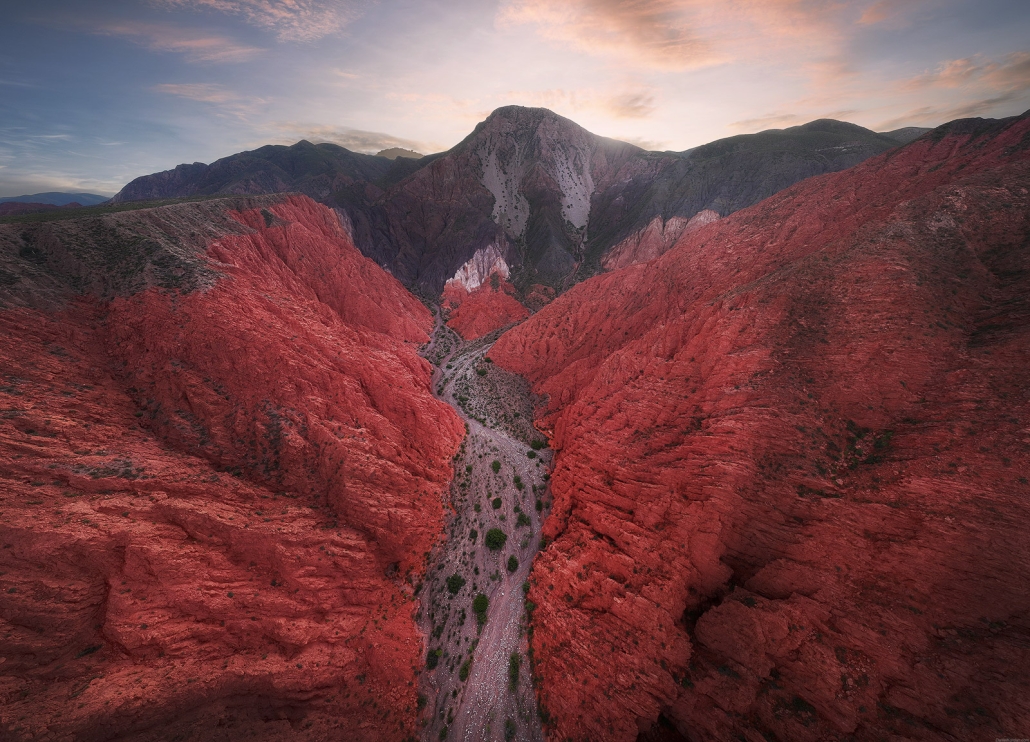
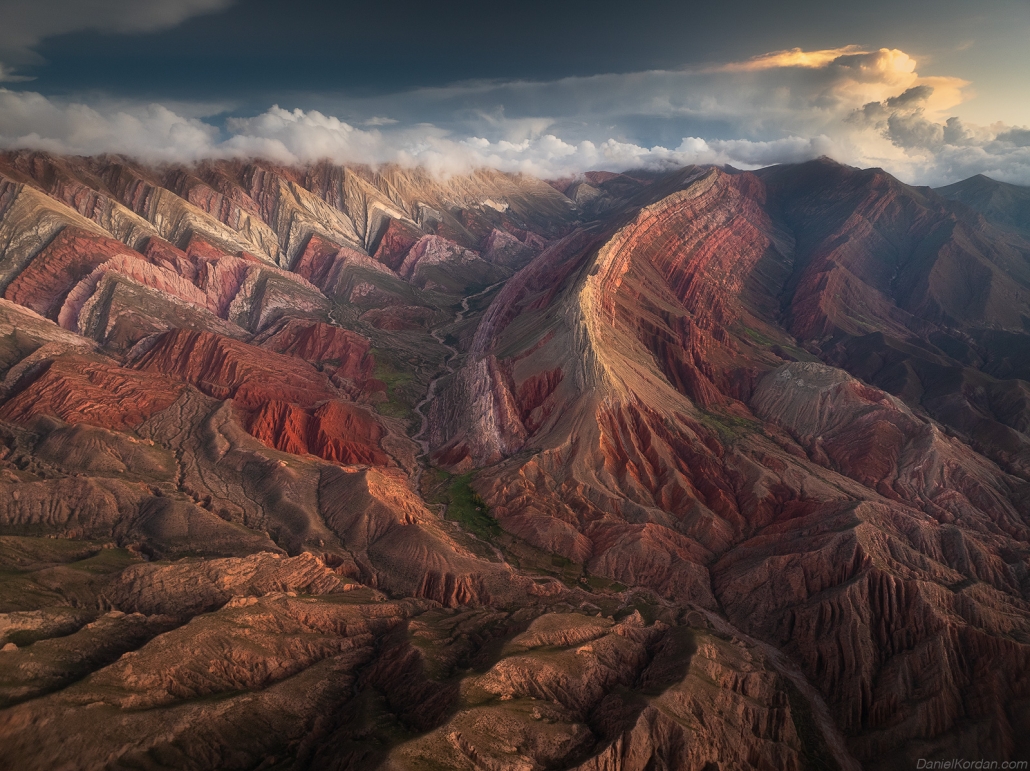
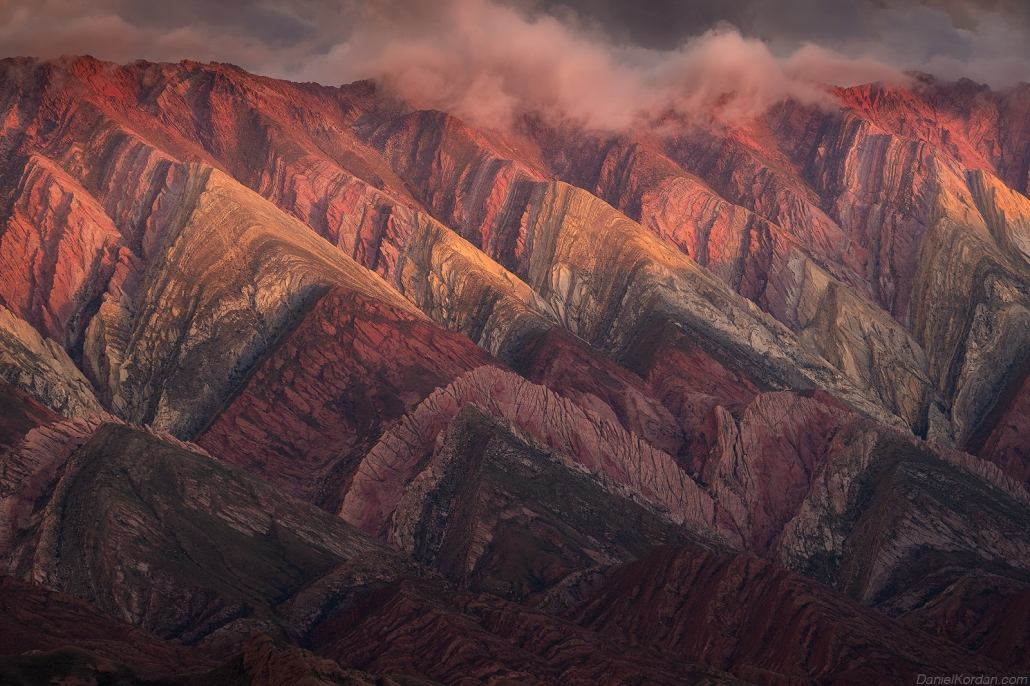
After breakfast we’ll check out from our hotel, commencing the journey towards the mountainous region of Purmamarca. This area is like an oasis within the desert landscape. It is well-known for its breathtaking and dynamic natural beauty, characterised by colourful mountains that make for stunning abstract photography. After checking in at our hotel in Purmamarca, we will take Route 51 to Salinas Grandes, a large salt flat at about 3350 meters above sea level, where we will have a sunset session. After the session we will return to Purmamarca for a dinner and overnight.
Day 3
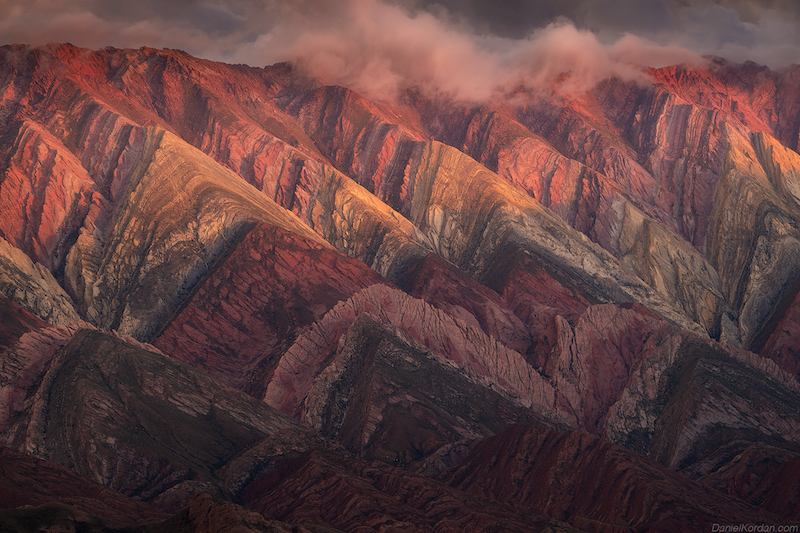
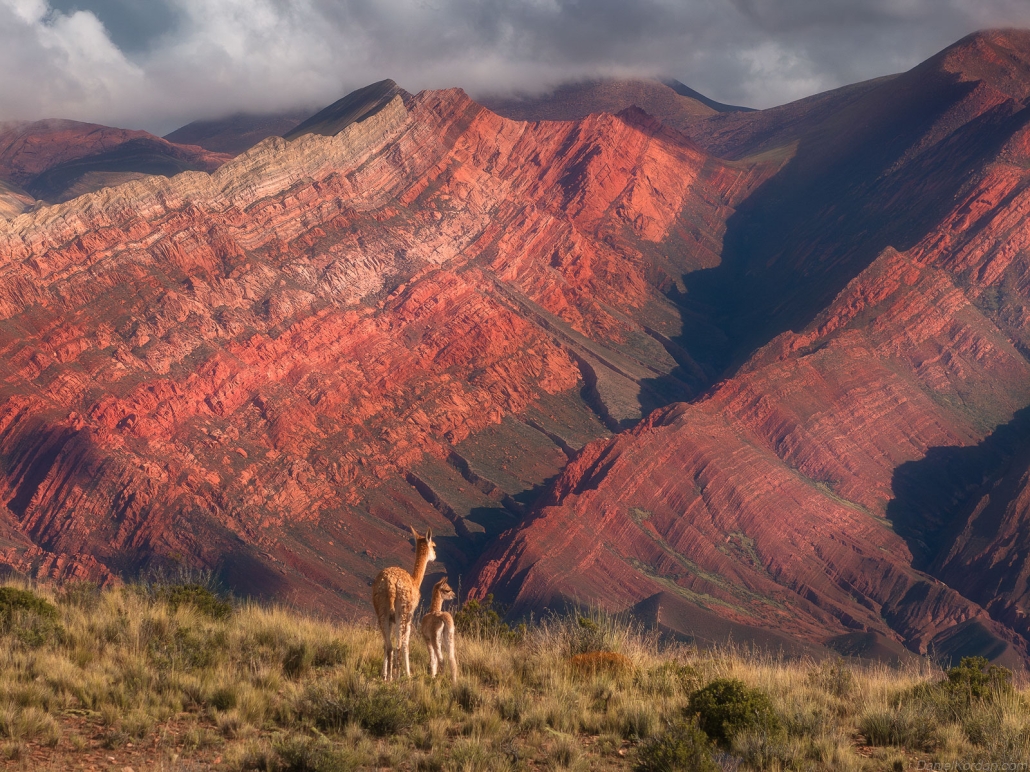
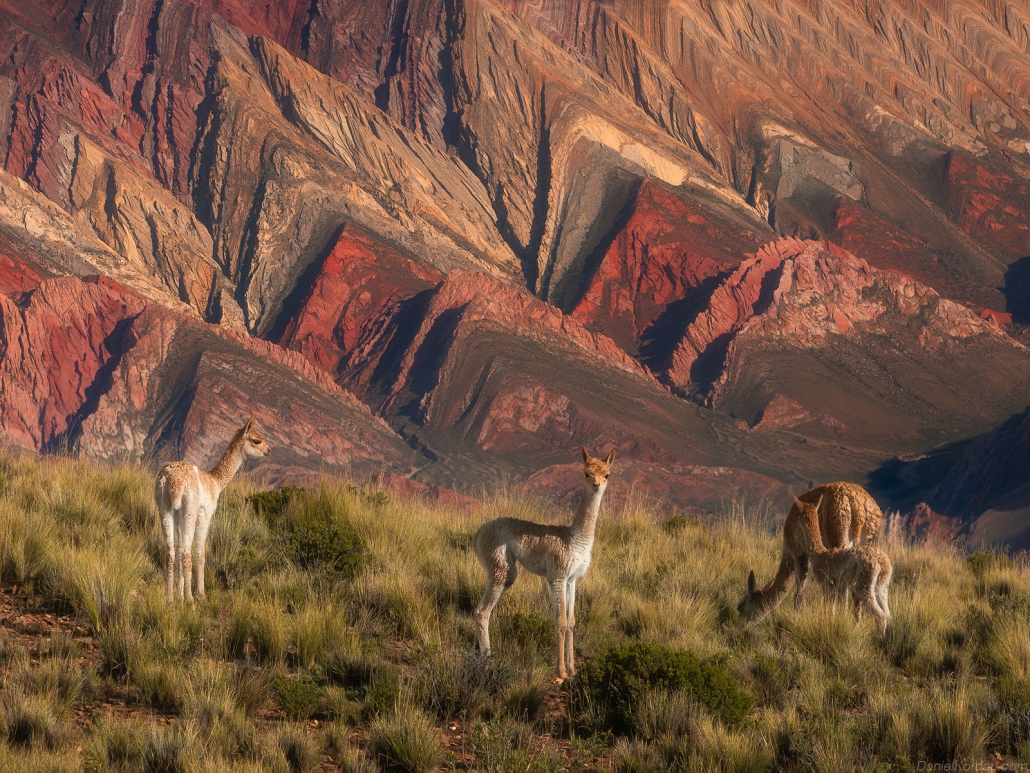
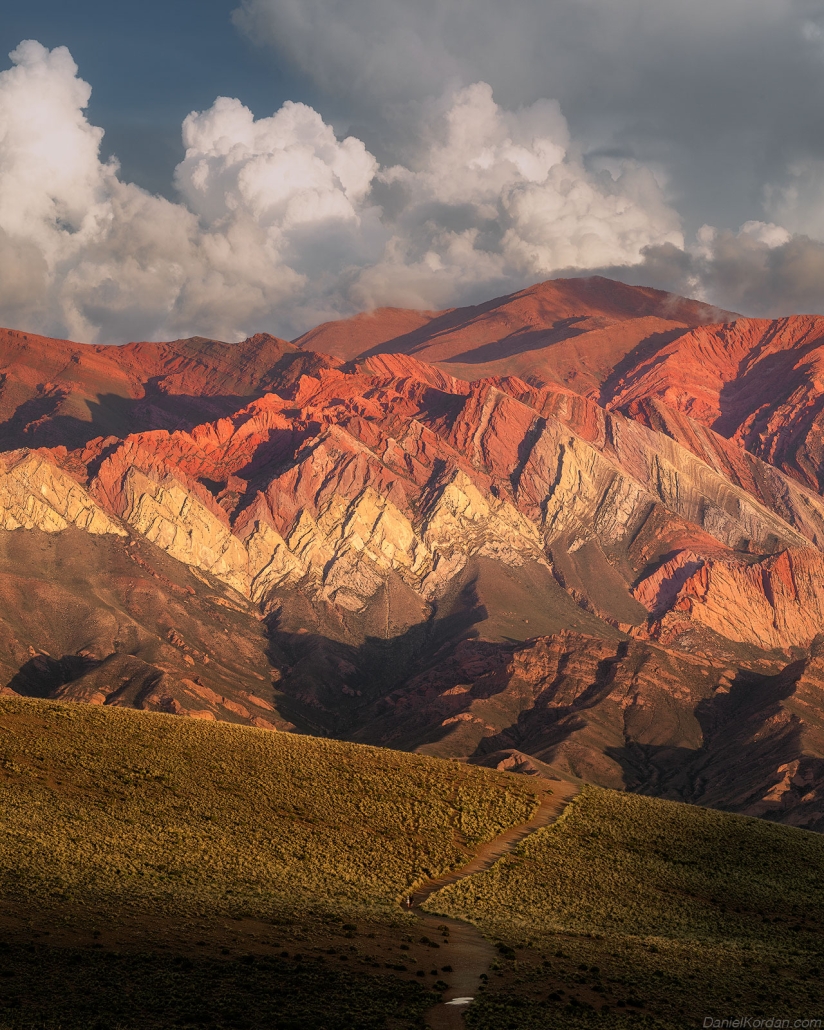
At dawn, we will explore the surroundings of Purmamarca, a typical Andean village, and its famous Cerro de los Siete Colores. Then, we will tour the Quebrada de Humahuaca, a UNESCO World Heritage Site recognized for its landscapes and cultural heritage. We will visit the towns of Maimará, Tilcara, and Humahuaca, where we will have wonderful photographic opportunities. In the afternoon, we will ascend to El Hornocal at 4,000 meters above sea level to photograph one of Argentina’s most fascinating mountains, known for its incredible texture and variety of colors. After the session, we will return to Purmamarca for dinner and an overnight stay.
Day 4
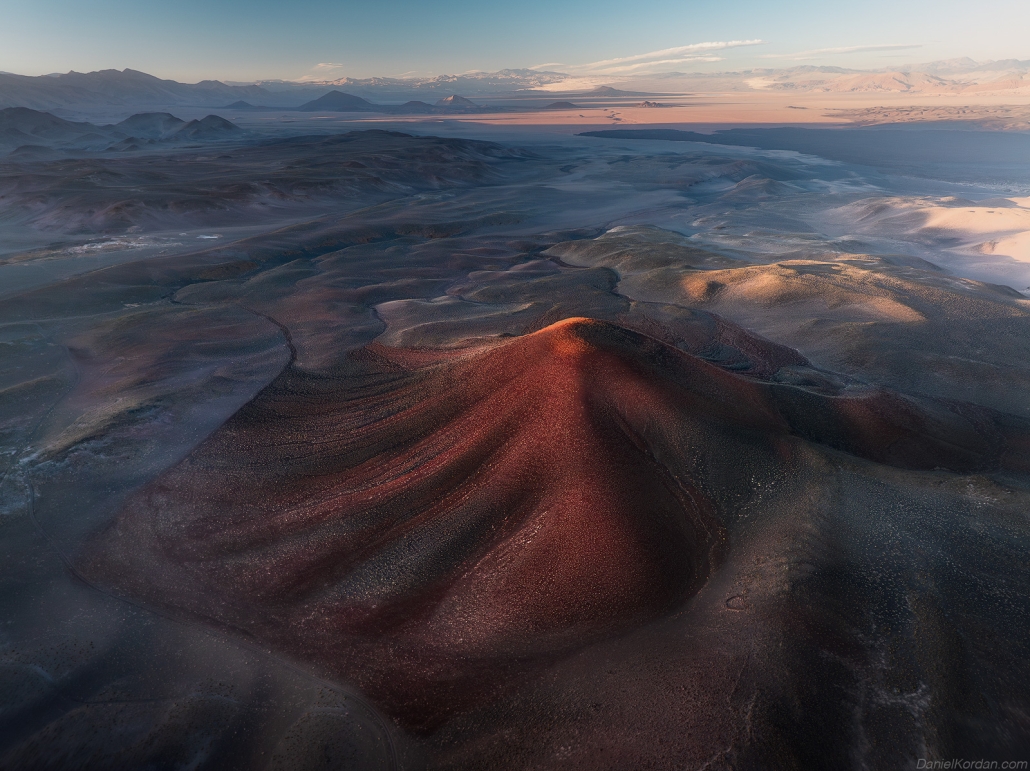
Today we will begin our journey through the Puna de Atacama, an arid high plateau with average elevations near 3,500 meters above sea level, featuring volcanoes and many salt flats, where we will stay for the next few days.
Our tour starts after breakfast. We will take Route 51 to reach Susques. There, we will take Route 40, the longest in Argentina, to explore volcanic areas with numerous photographic opportunities. We will see llamas, guanacos, vicuñas, foxes, rheas, and possibly some Andean condors. At the end of our trip, we will arrive in San Antonio de los Cobres, where we will spend the night.
Day 5
This day we start early to continue our ride along the high plateau.
We will visit Santa Rosa de los Pastos Grandes, the Pocitos Salt Flat, and the Hombre Muerto Salt Flat, all offering many photographic opportunities. This region is the center of lithium extraction in Argentina, so we will see active mining operations. After having lunch in a mining town, we will head south.
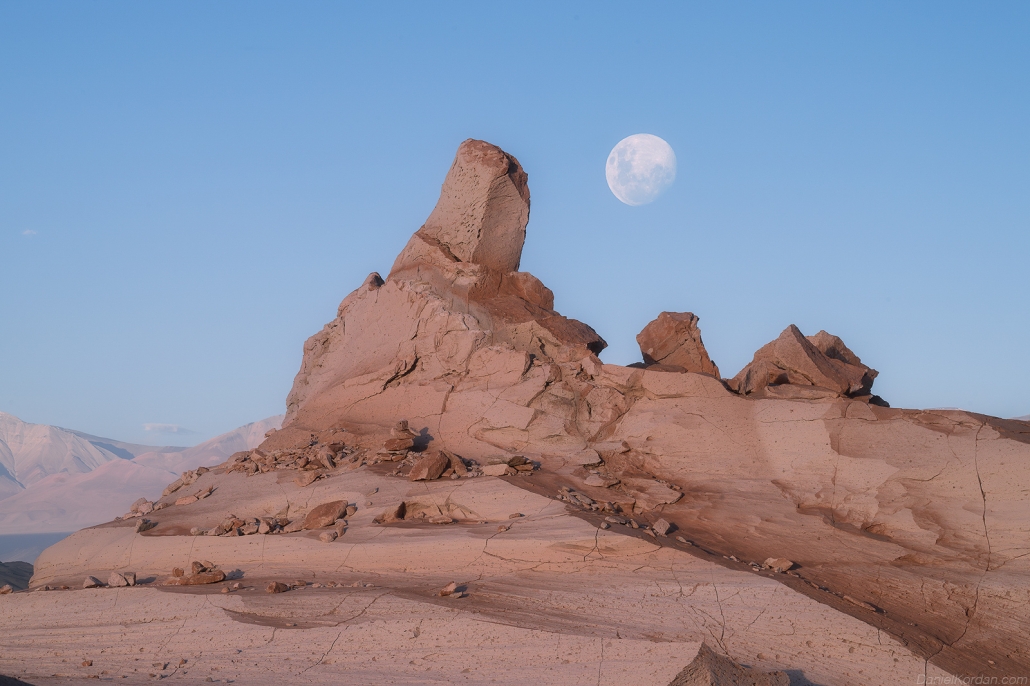
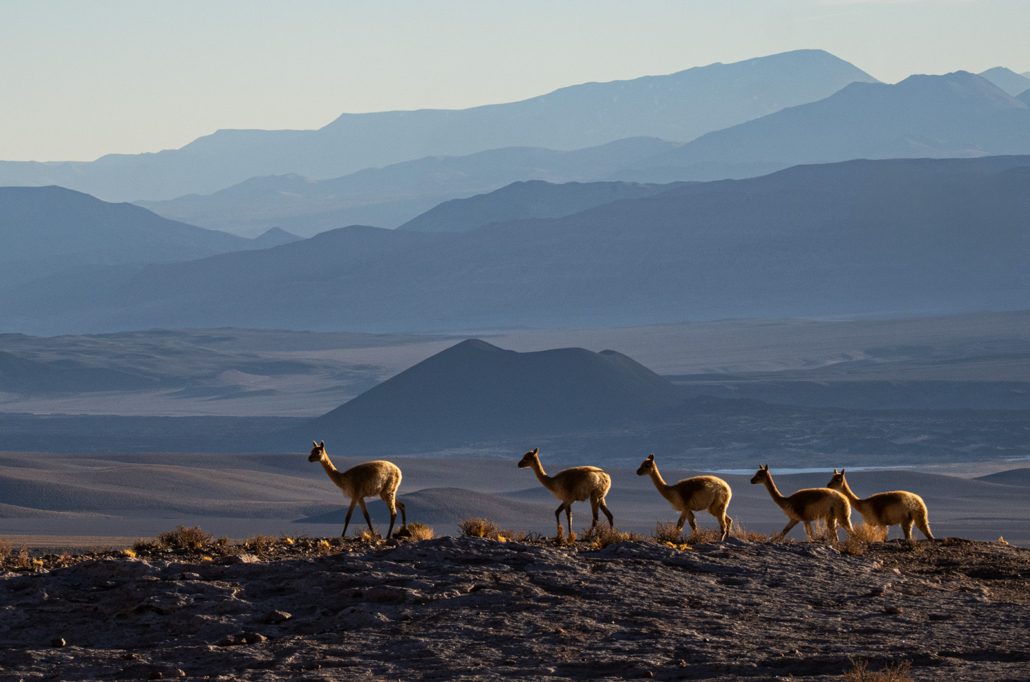
We can observe numerous herds of vicuñas, a wild llama characterized by having the most delicate and expensive wool on the planet. This trait brought it to the brink of extinction a couple of decades ago. After efforts and legislation banning its hunting, the population has been recovering, and it can now be seen quite frequently. We will then enjoy a sunset session at a stunning location with volcanic rock formations. Afterwards, we will proceed to Antofagasta de la Sierra for dinner and overnight stay.
Day 6
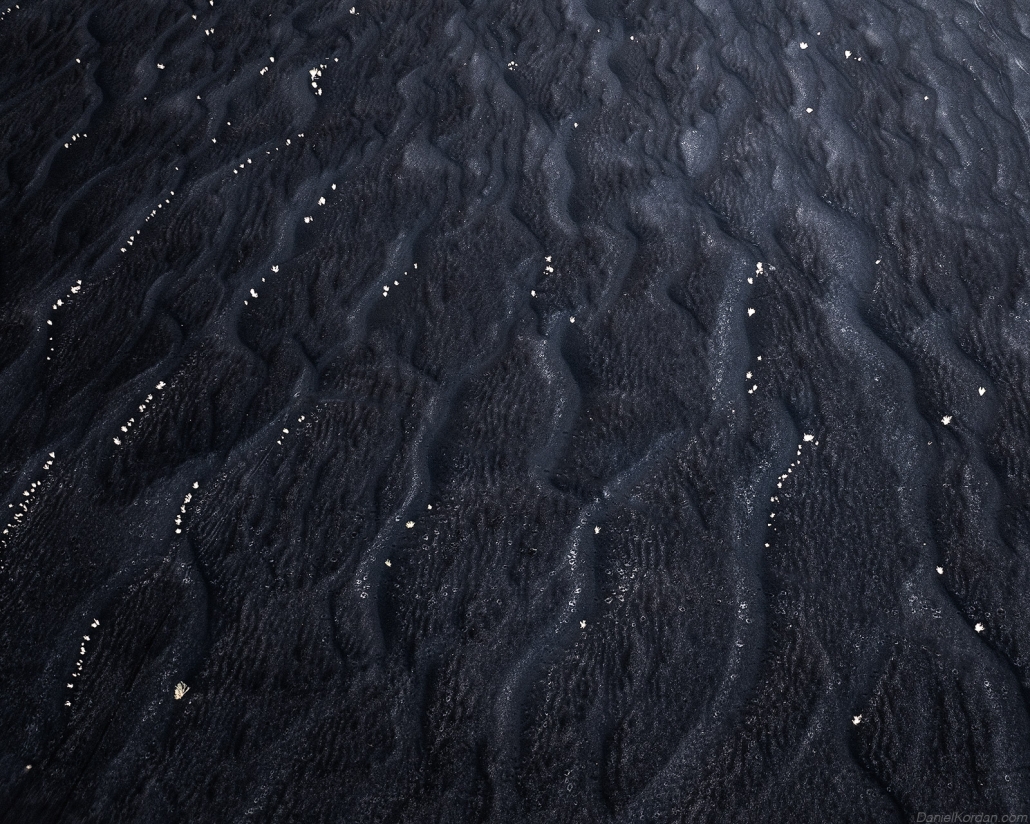
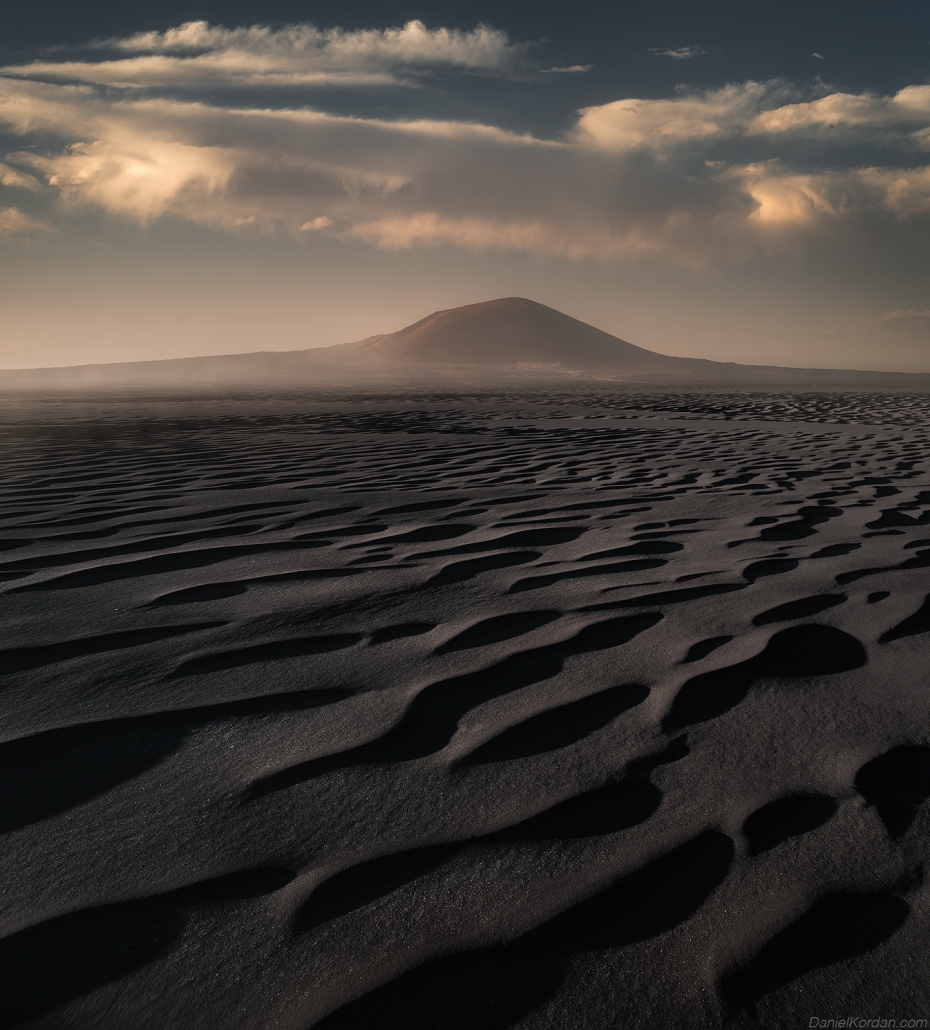
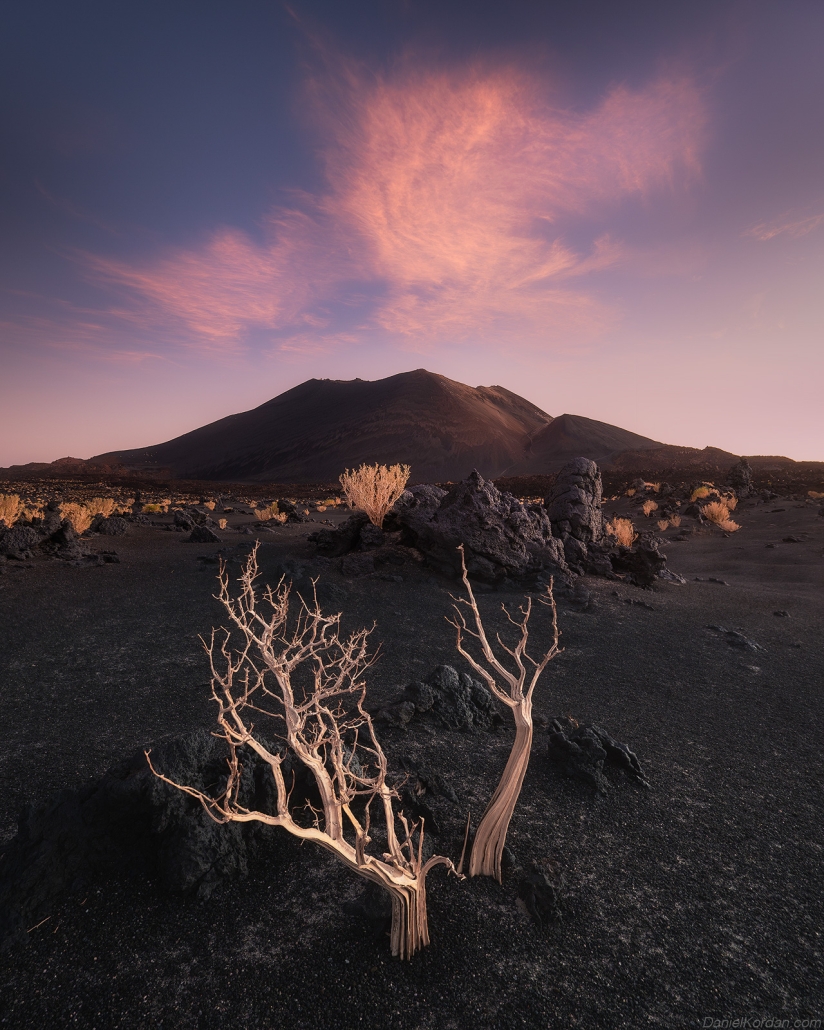
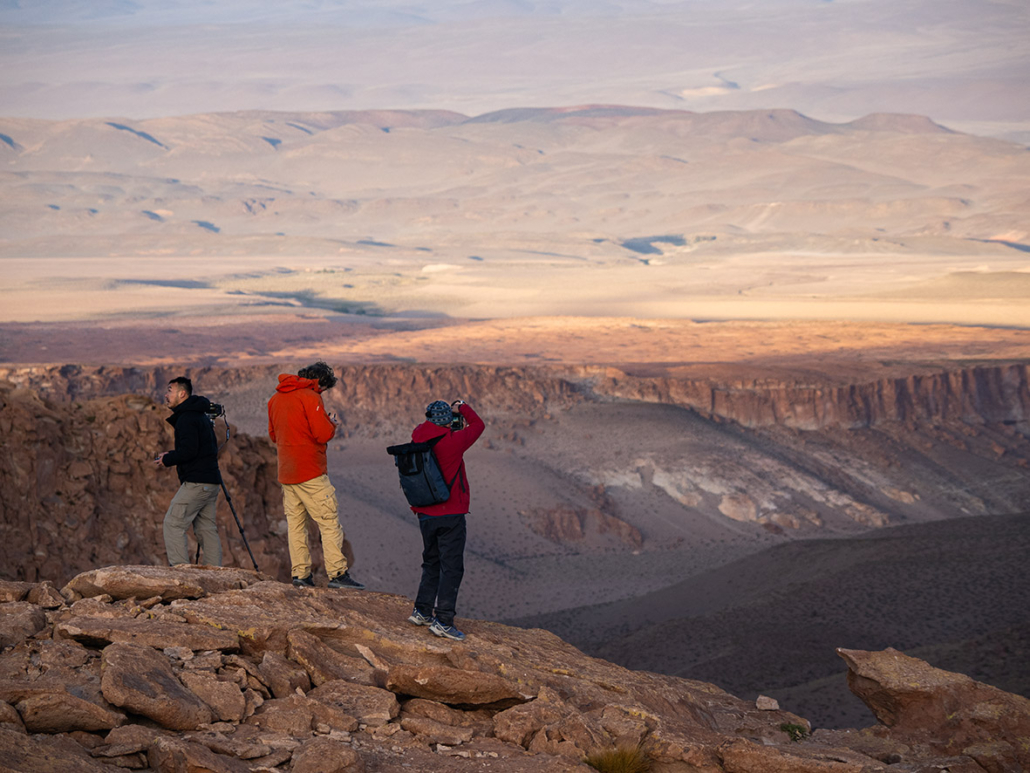
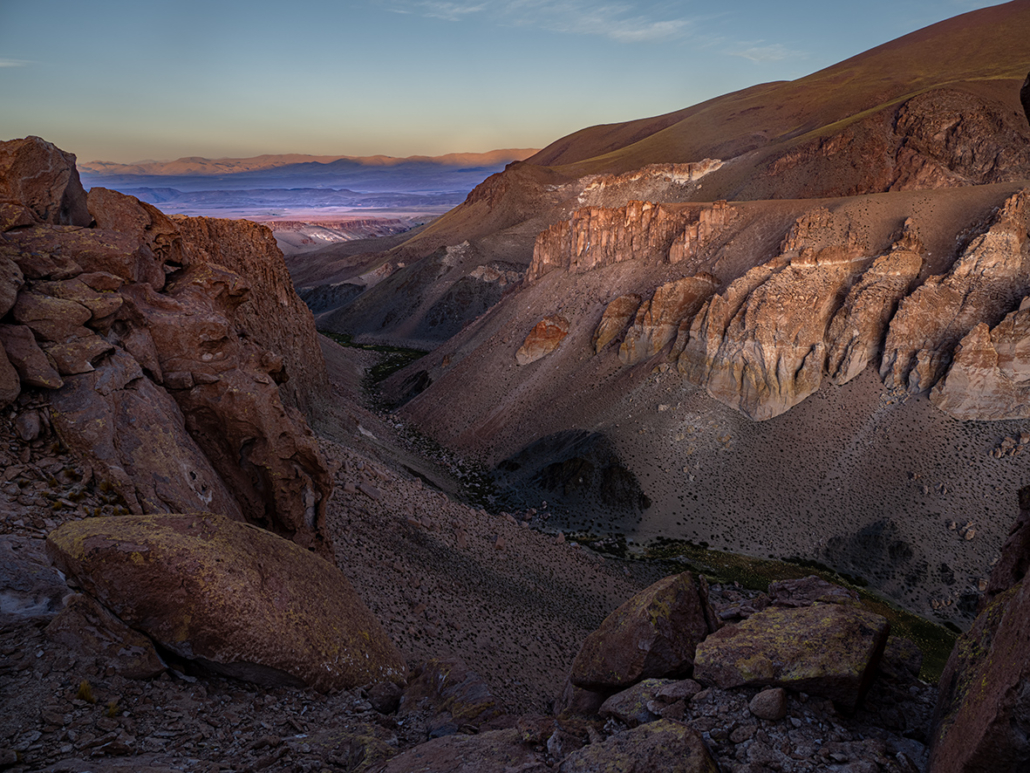
Today, we will leave the hotel before sunrise to reach Mirador del Mirihuaca for a sunrise session. This location is adjacent to a stunning canyon carved into volcanic lava. If you have a drone, you can fly it there to capture incredible aerial images of the landscape. After sunrise, we will return to the hotel for breakfast. The rest of the morning is free, offering a good opportunity to process photos or explore Antofagasta. Following lunch, we will visit Alumbrera Volcano, where we can walk on its black sands and wait for sunset. We will stay overnight in Antofagasta de la Sierra.
Day 7
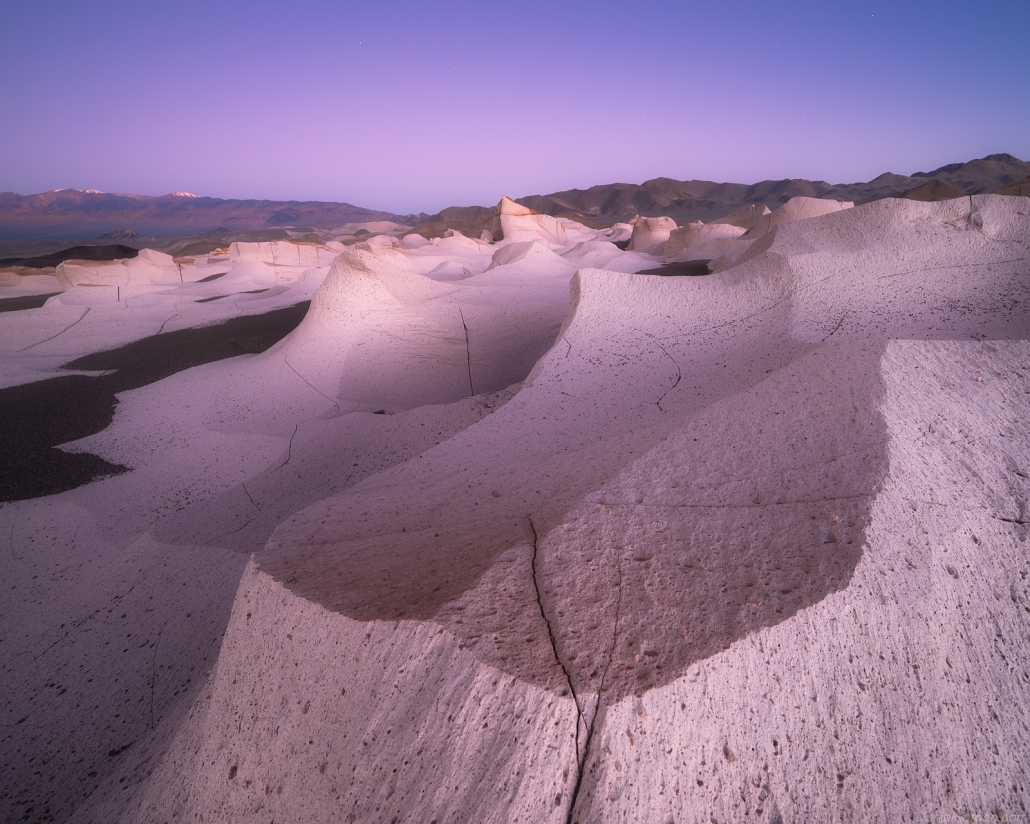
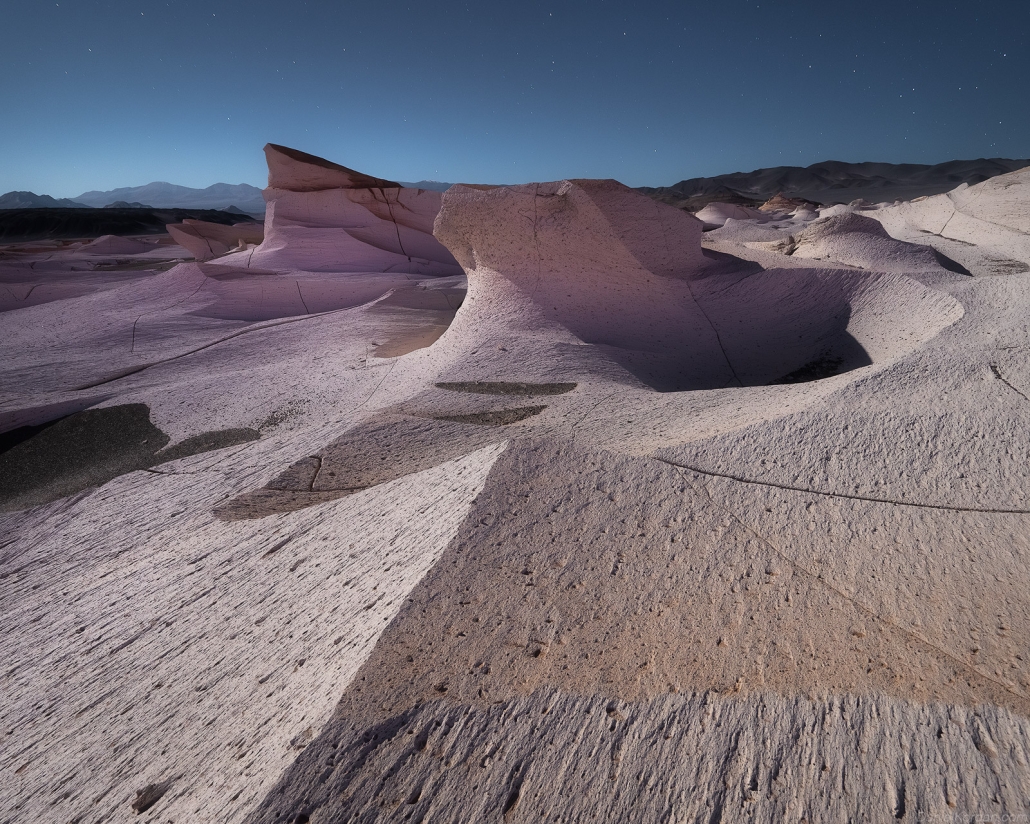
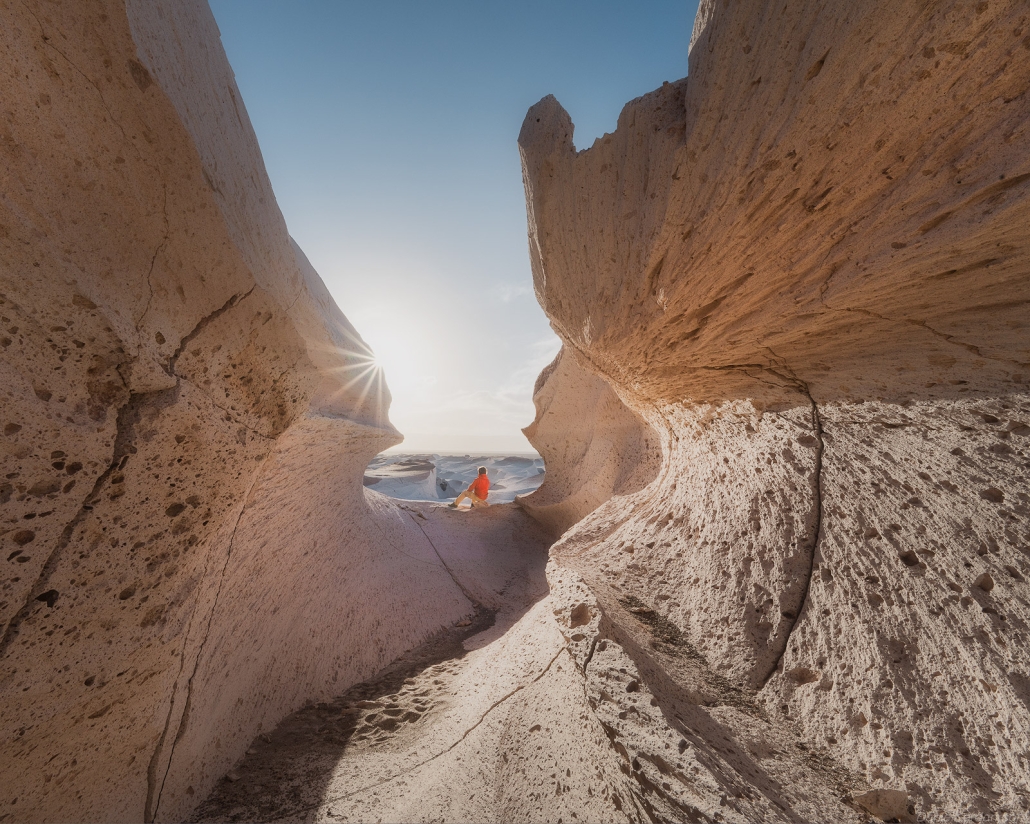
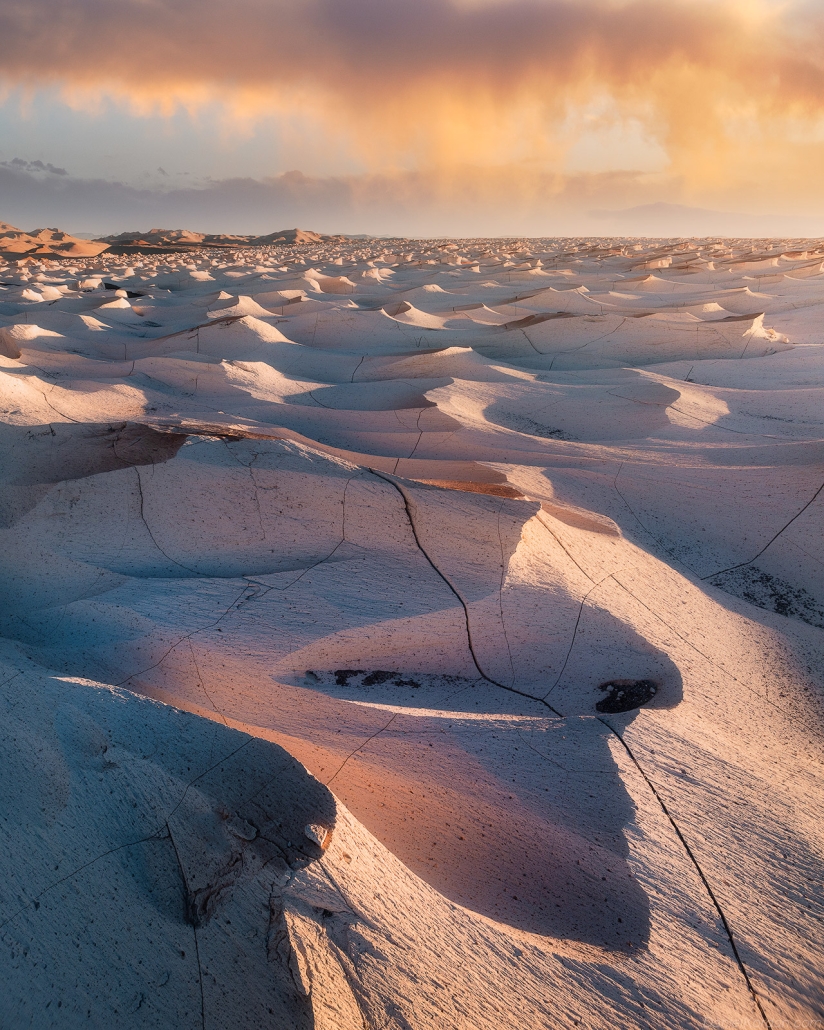
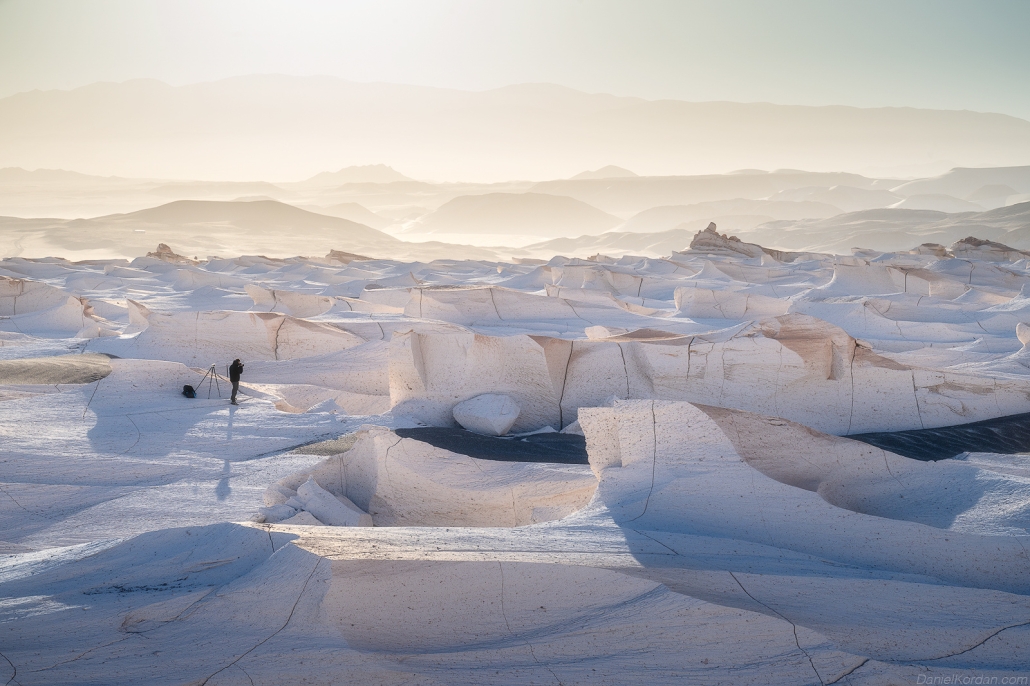
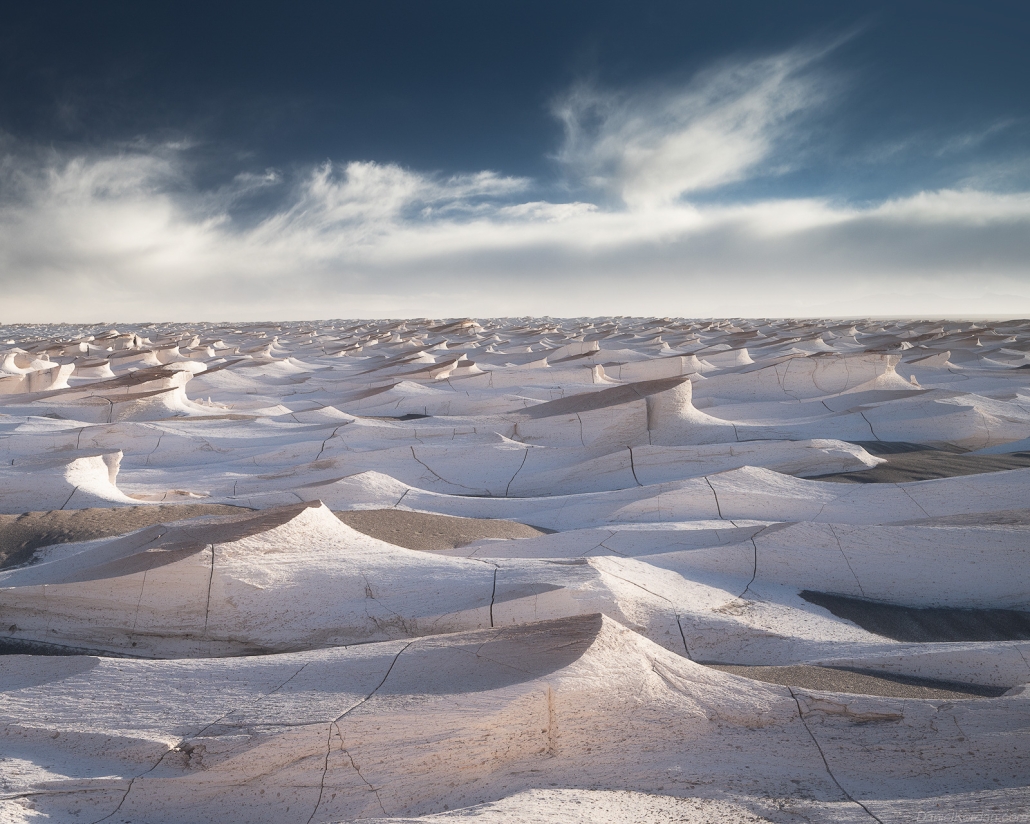
We’ll begin the day with an in-depth exploration of the volcanoes surrounding Antofagasta de la Sierra during a sunrise session amidst breathtaking lagoons. Afterwards, we’ll head to the peaceful village of El Peñon, where we’ll stay at a local hostería for the next three nights. The village’s charm lies in its rural setting, featuring adobe-brick houses that lend themselves to stunning photographs. This evening, for sunset, we’ll visit the Campo de Piedra Pomez, a vast lava field, to enjoy the dramatic and endless landscape as the sun sets.
Day 8
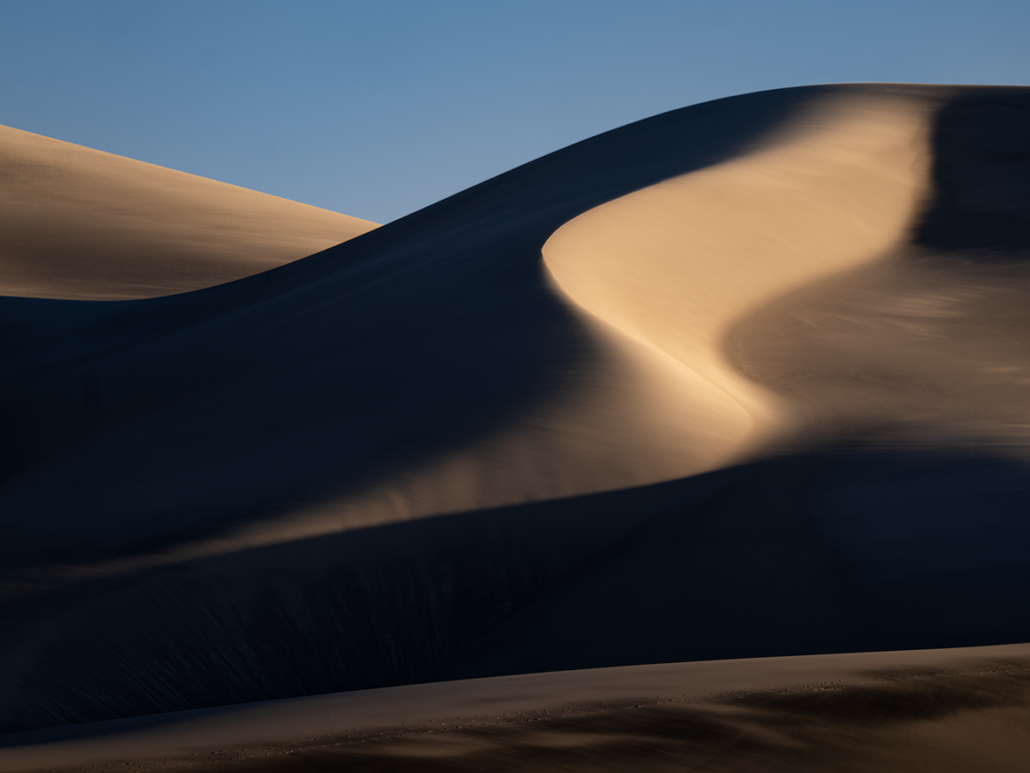
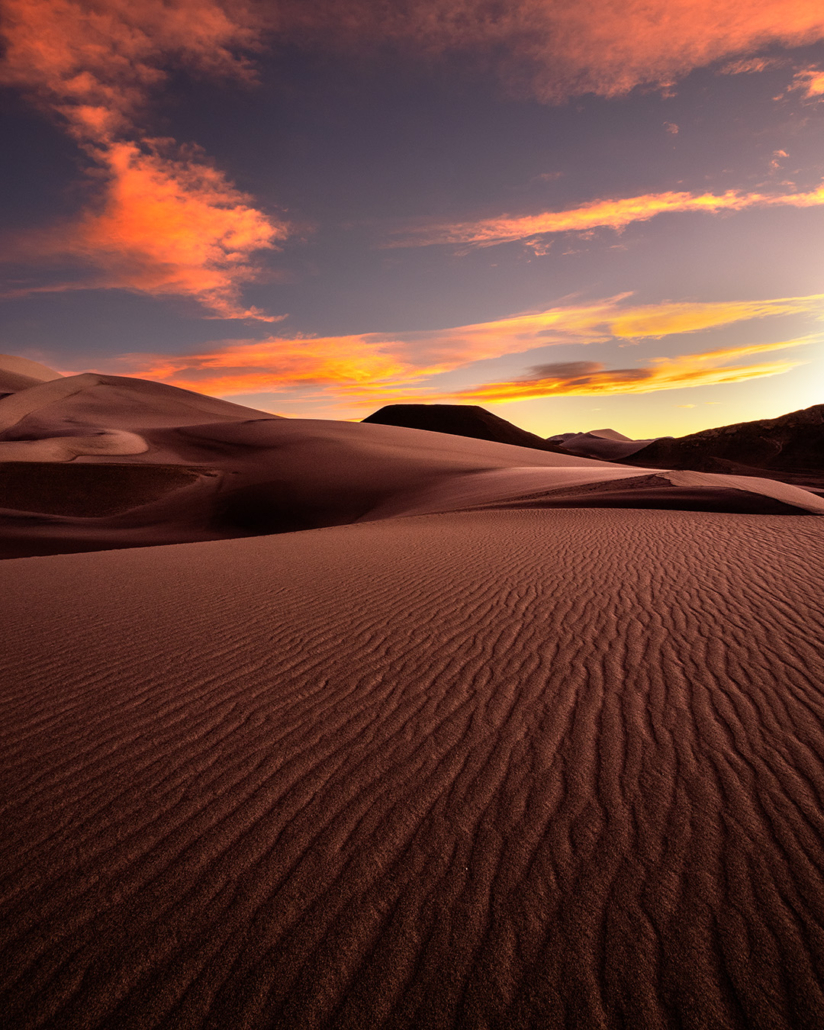
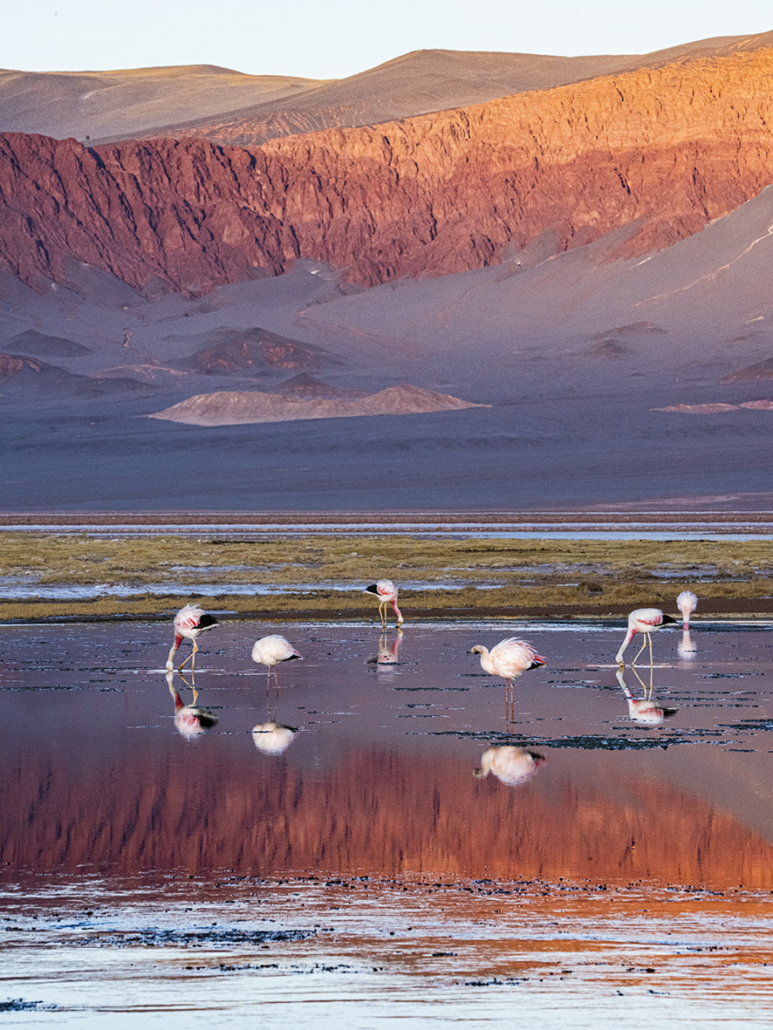
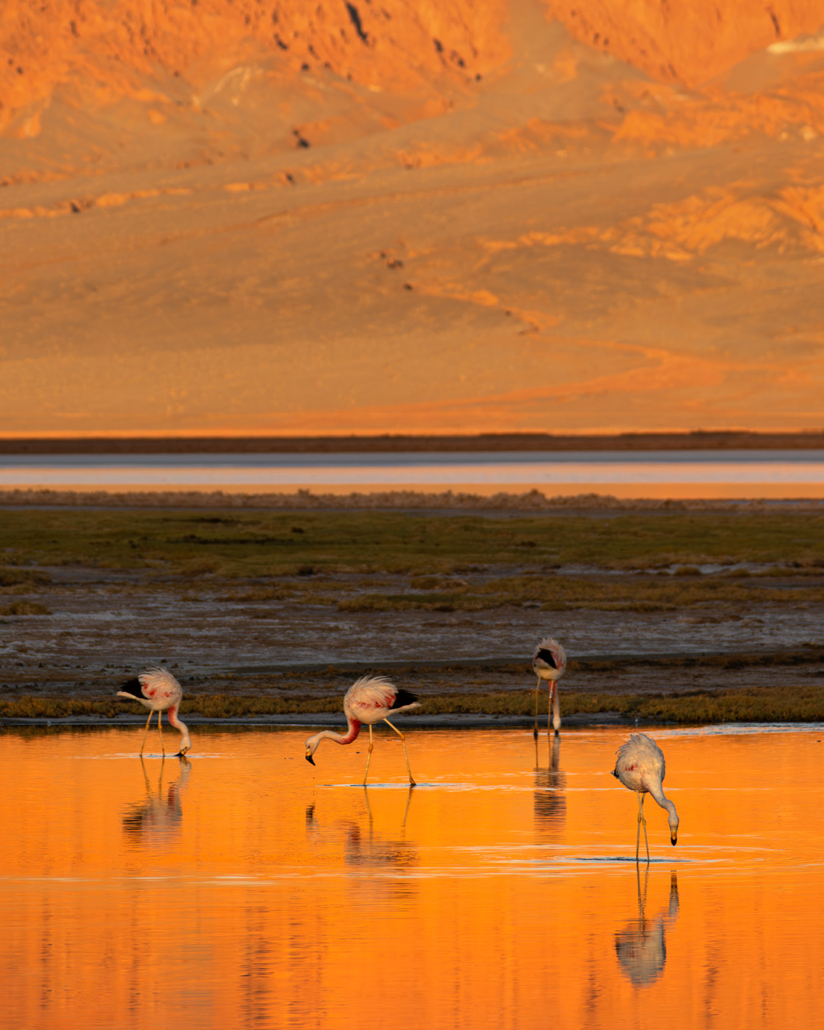
Today we head out for an early sunrise session at the Laguna de Carachi Pampa, where stunning reflections create dreamlike landscapes. The red lake is home to pink flamingos, many of which wander along the basin’s edge. Their blush-pink plumage is beautifully set off by electric green algae along the lake’s edge, creating a breathtaking sight. In the background, large black volcanoes loom on one side, while red mountains on the other cast their reflections across the lagoon. Later, we will return to the village for lunch. As the day ends, we’ll head to the dunes of El Peñón to enjoy the sunset.
Day 9
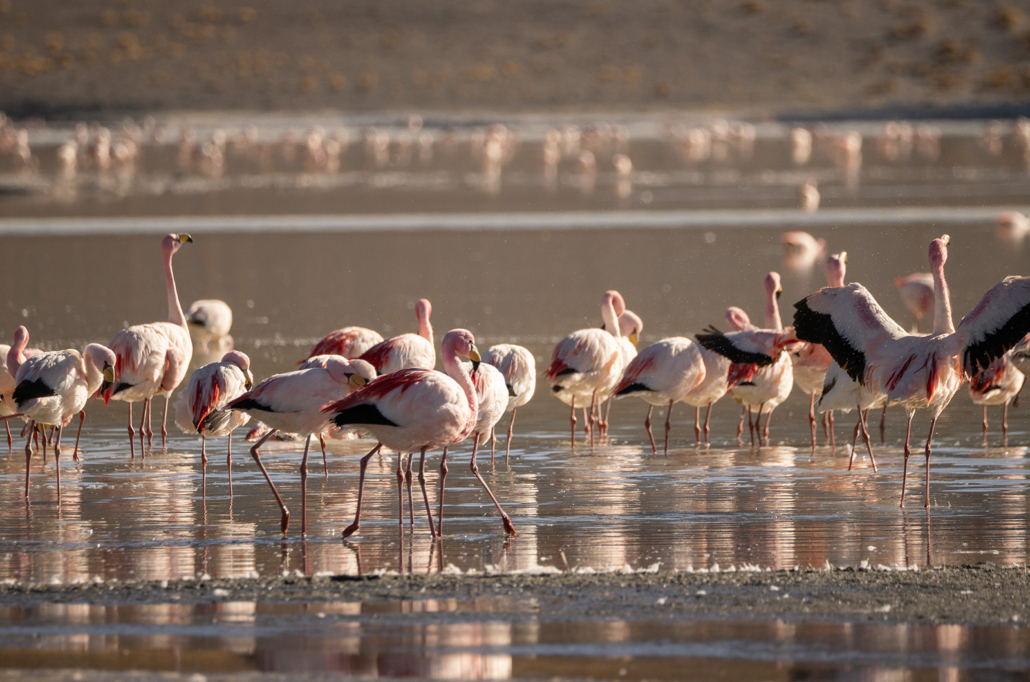
Today, we’re exploring Galán Volcano. Our first stop is Laguna Grande, a breeding ground for Andean Flamingos, with populations that can reach up to 50,000 in some years. Watching the flamingos’ flight and the reflections is stunning. Next, we’ll visit the caldera of Galán Volcano, which is nearly 40 kilometers across. Inside, we will find lagoons and hot springs.
Day 10
Today, we return to Salta. En route, we’ll visit Laguna Blanca Reserve to see a large vicuña population. Here, local natives follow an ancient tradition of capturing wild vicuñas, shearing them, and releasing them—this occurs annually before summer. Afterwards, we’ll explore Quebrada de Cafayate, known for its striking red rock formations. Finally, we’ll arrive in Salta for hotel check-in and a farewell dinner.
Day 11, March 29, 2027
Today, we return to Salta. En route, we’ll visit Laguna Blanca Reserve to see a large vicuña population. Here, local natives follow an ancient tradition of capturing wild vicuñas, shearing them, and releasing them—this occurs annually before summer. Afterwards, we’ll explore Quebrada de Cafayate, known for its striking red rock formations. Finally, we’ll arrive in Salta for hotel check-in and a farewell dinner.
For booking: please inquire sending mail at Mail@danielkordan.com or send request via form below the page.
Price: 6900 USD
Included in the price:
– All transfers (jeeps, including drivers’ services, gasoline fees etc)
– Lodging in hotels twin rooms
– All meals
– Instructions by professional English-speaking guide
– Local photographer guiding
Not included in the price:
– Airfare to and from Salta airport
– Taxi from Hotel to Airport on day 10
– Visas (if applicable)
– Single supplement (1000 USD)
Difficulty:
All locations are reachable by car, no hiking involved. The only difficulty might be elevation gain, but we are always below 3600 m which is ok for most of people. If you feel you need extra time to acclimate arrive 2-3 days earlier to Salta.
Tour leader – Ossian Lindholm
Ossian Lindholm, a renowned nature photographer from Tucumán, Argentina, has spent decades capturing the pristine beauty of his homeland. Trained as an agronomist, Ossian transitioned from a career in science to pursue his deep passion for nature through photography, teaching, and documentary filmmaking. His work focuses on preserving and sharing the landscapes, nature, and culture of Argentina in their most untouched forms.
Ossian has published five books, 14 calendars, and leads photography courses and expeditions across Argentina. For the past four years, he has hosted Travesia Fotograficas, a popular weekly TV documentary that uses images, words, and music to inspire viewers to love and protect their natural surroundings.
Born in Tucumán and raised in Buenos Aires, Ossian’s love for exploration was nurtured by his parents, both avid amateur photographers and travelers. By age seven, he was captivated by Argentina’s landscapes and began carrying a camera everywhere. As a teenager, he turned photography into a serious pursuit, setting up a black-and-white photo lab at home and taking on freelance work at family events.
Inspired by National Geographic, Ossian developed a deep connection to nature photography. After earning his degree in agricultural engineering, he worked as a scientist before fully dedicating himself to photography in 1998. Since then, he has guided photography tours, collaborated with biologists, and published his first photography calendar in 2001. His mission is clear: “Para Conservar, primero hay que Conocer” (“To conserve, first you must know”).
Ossian’s work is driven by a profound belief in the sacredness of nature and humanity’s symbiotic relationship with the Earth. Through his photography, teaching, and filmmaking, he strives to convey this message, inspiring others to cherish and protect the natural world. His life’s calling is to use his craft to foster a deeper connection between people and the environment.


